In your latest film BREATHLESS, why did you choose that specific road and tree in California and why did you choose the name Breathless? This is obviously a reference to the English title of the Godard film À bout de souffle (1960).
Well, the spot was chosen because it’s very isolated, and I wanted to make what I would call a non-narrative film, although all films become narratives in some sense. I chose that particular spot because of this colorful tree, and it was a time of year when there wasn’t much traffic there. I wanted to make a film that would comment on narrative film, and I wanted to play off the Godard film Breathless because I think its narrative is stupid. This idea of the male fantasy—the criminal stealing from and abusing women—why would I even want to think about that story? So, I wanted to make a non-narrative film of the exact same length, hoping that during those 87 minutes, viewers would simply become engaged in watching the way the light changed. My proposed narrative was simply light changing with no real narrative occurring.
But that didn’t happen when I set up the camera. Events unfolded in front of it, creating what I would call a “found narrative”, which turned out to be a political found narrative. And I thought, “Oh, this is what Godard was interested in with his work.”
Because of the military airplanes, right?
Yeah. And also, the whole trimming of the tree is to prevent forest fires that have been happening in the area due to the lack of maintenance on electrical wires. So, it’s Southern California Edison trying to cover themselves, you know? There are interesting politics embedded in these narratives that aren’t immediately evident. You don’t realize the planes are conducting war games, locking in on me as if trying to “target” me in this simulated game they’re playing.
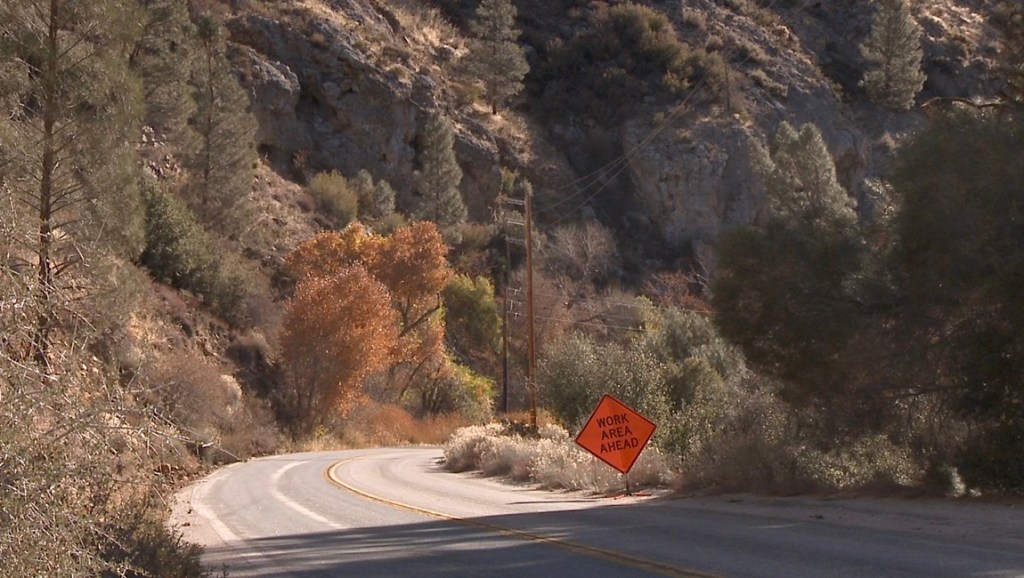
BREATHLESS (James Benning, 2023)
So the initial choice was an aesthetic one, and then everything else kind of unfolded unexpectedly.
Yeah, exactly. And that became much more interesting to me than my initial idea of making a purely non-narrative film just to comment on narrative. I realized that narratives can emerge naturally; they don’t have to be some self-conscious bullshit about wanting to be a criminal who kills a cop.
All you need is a girl and a gun, as Godard said. Obviously, you disagree. In general how do you choose your landscape filming spots? Could you tell us your personal relation to the American countryside, highways and national parks? The concept of space plays a very important role in your cinema. What is the decision-making process like when you choose a location to film?
At an early age, I was taken out into the countryside by an uncle. He didn’t necessarily tell us to look and listen, but he provided us with that experience. And at a very early age, I remember, when I was about eight, discovering that I could feel both hot and cold on a fall afternoon—the sun was warm, and the wind was cool. And I thought, “Oh, that’s kind of spectacular, that one can feel both cold and hot at the same time.” And from experiences like that, I began to pay closer and closer attention to places that I would go.
And over time, I developed a love for travel. I never kept a notebook, but it’s all kind of in my head where things are. So when I decide to make a film, and if it’s about this or that, I already have, from years of travel and paying attention, images in my mind. And then they just, depending on what the film is about, evolve from that.
And is it more like you have an image in your mind and then you find it in reality, or do you just see something in reality and then feel like it could be a spot for a film?
Yeah, it can go either way. But most of the time, I have an idea of where I’m going and am traveling out there. I might get there, and it’s not exactly how I remember it, but I might find something else nearby or on the way that fits the same “ideascape”. So I’m never locked into any particular place.
When I made “13 Lakes”, my first idea was to film the 13 largest lakes in the U.S. It turned out five of them were in Alaska, and four of those were frozen over all year long. So I thought, “Well, that’s not going to work”. Then, I decided to research lakes I knew about to get a variety—ones accidentally made by failed irrigation systems, by damming the Colorado River, or by volcanic activity, things like that. In that case, I found places through memory and also through research, looking into lakes with interesting histories. So I do a lot of research, but I also have this mental inventory of places because I’ve traveled a lot and remember places very well.
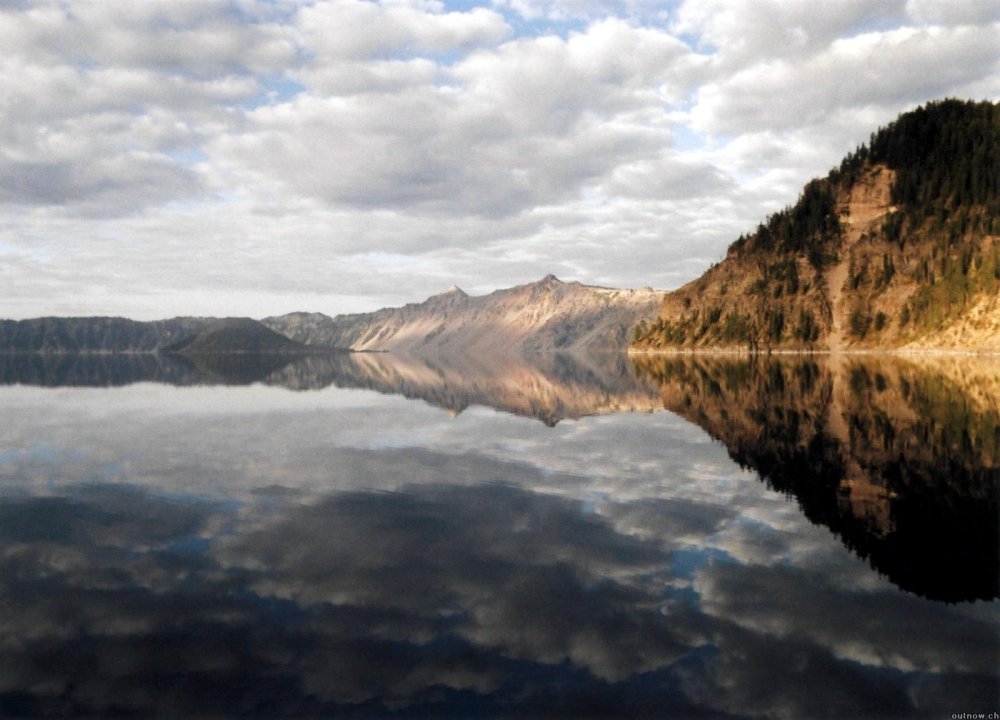
13 Lakes (James Benning, 2004)
Like a very specific visual memory.
Yeah, exactly. And sometimes, all those images gather together at night when I’m dead tired, and I think, “Oh, that’s a film”.
What do you think of roads and their importance in American history and cinema? How do you reflect them in your own way of making road movies or making movies that feature roads in general, like North on Evers, Small Roads, Los, The United States of America?
Well, there’s that whole romance of the road, starting with Kerouac’s On the Road. That sense of freedom was in the air back in the ’50s and ’60s, and I was definitely influenced by it. But when I reread On the Road, I find those characters pretty disgusting—it’s that male dominance and craziness again. Still, the road itself is simply a way to get from one place to another. I feel like the U.S. is my backyard; I could drive anywhere in the country without a map. I can get from here to there.
But you’ll need the road signs at least.
Yeah, I can tell pretty much. But when I fly across in a plane, I can often look down and recognize where we are through certain visual cues—that’s taken a long time and a lot of attention.
And when we think of the railroads, does it relate for you to American history, industrialization, and the change over time?
Of course, and when I made RR, it became very apparent to me—the over-capitalization of America, with all these goods being transported across the country, overconsumption, and so on. But my interest started when I was a kid. I loved trains, and my father would take me down to the train station in Milwaukee. Back then, they were still running steam trains. When they pulled into the depot, these big puffs of smoke would go underneath and then billow out—it was like a magnificent sculpture. So I literally like trains for their sculptural quality. And then there’s the idea that a train can’t go up a slope more than a 2.5 percent grade, so it has to fit into the landscape. It becomes a piece of sculpture cutting through the landscape.

RR (James Benning, 2007)
The landscape is defining the route.
Yeah, exactly. So all of that, you know. But at first, it was just purely a young boy’s love of trains. And I still love trains.
It’s funny because in Europe, trains are for passengers, and it’s easy to get around. But in the United States, it’s more about cargo trains, and it’s not really common to take passenger trains.
Yeah, we have a very poor passenger train system. On the East Coast, it’s maybe a little better because of the high number of commuters, and perhaps a bit in the Midwest, but not really elsewhere. I’ve ridden Amtrak across the country a number of times and actually enjoyed it, but it’s very expensive—more than flying.
What do you think of the element of surprise while filming? Your way of filmmaking transfers life and time to your audiences. Do the places and the scenery you decide to direct your camera to prepare your films already, or do you let life guide and narrate stories sometimes?
I’m very aware that fortuitous events can occur, and I know that sometimes they can be spectacular and fantastic, while at other times they can ruin the shot. But more often than not, it’s surprising in a good way because of the unexpected element. Very rarely have I had to scrap a shot because something unplanned happened. Occasionally, it’s just something on the edge of the frame, moving in and out in a way that becomes annoying and doesn’t add anything. But if something enters the frame and stays, that can be interesting—it can be that close to being either good or bad.
When I made 11×14, my first feature film, I choreographed a lot of people to move through the scenes, but I shot it in public places, so I knew I’d also capture people who weren’t part of the choreography. I was very interested in the contrast between those who were meant to be in the shot and those who weren’t, and how that dynamic worked.
A funny thing happened while I was making 11×14. I was living in Evanston, and one day I went down to Chicago, took the L train to buy some filters for my Bolex at Helix, this big camera store. When I got off the L train and was walking toward Helix, they were shooting a made-for-TV movie with Freddie Prinze—the actor whose son later became famous. Freddie Prinze died a few years after that shoot; he was on the verge of becoming a big star. Anyway, I accidentally walked through their shot without realizing it was a film set, so I reacted naturally, and they decided to keep me in the shot. So I became a fortuitous event in a made-for-TV movie while making a film where I was aiming to capture things like that. The movie was released, and it’s on YouTube, actually. I’m coming down the street in a very noticeable red shirt—it’s funny to watch.

11×14 (James Benning, 1977)
But you’re not in the credits, right?
No, no, not at all. But that was my first professional acting role—accidentally.
Apart fom 11×14, in which other films did you direct actors?
I’ve made a number of films with actors. In Landscape Suicide, there are actors, and I made a film with Sofia Britto from Argentina, where she speaks Spanish, and I speak English. It’s an hour-and-a-half film of us sitting on a couch talking together, without knowing each other’s language. We scripted it so we could communicate while watching a film on TV, so you hear our entire hour-and-a-half conversation in two different languages.
You scripted it like a non-verbal communication?
Well, we had some bilingual friends who helped us communicate since neither of us knew the other’s language. Since then, she’s learned English, and I’ve learned some Spanish. It’s a very interesting film, but I’ve only shown it a few times because I can’t stand watching myself on screen.
One concept that is central to almost all of your films is shot duration and time. What is your concept of “time” and “duration” in cinema, and how do you decide on the length of shots (considering for example the long durations in “13 Lakes” and the shorter ones in “Los”)?
I mean, a lot of the durational films are also very conceptual. For example, the California Trilogy consists of all 2 1/2-minute shots. That’s because I decided to use a 100-foot load of 16mm film, which gives you 2 minutes and 47 seconds, and then I could select the 2 1/2 minutes I wanted. So I had this material limitation. When I moved to 13 Lakes, I could have done the same thing, but I decided to use 400-foot loads, which give you 11 minutes, though I preferred the round number of 10. So it’s a kind of rigid arithmetic for those particular films.
But I also realized that duration is a funny thing, especially as cinema today keeps getting shorter and shorter in a very manipulative way. I like the idea of bringing an openness to what I’m doing, where you have to engage with the shot and feel the discomfort of time. Time makes a demand on you; you have to experience it in a certain way.
And it’s easier to demand patience in the cinema than when watching at home.
Yeah, cinema has that built-in contract with the screen. You come, sit down, and agree to watch a rectangle for the film’s duration. You don’t have that contract in real life; rarely do you stare straight ahead for more than 10 seconds before looking in other directions.
How is your editing process when working with those long shots? Do you sometimes feel it needs a cut, or is it all preconceived, and you don’t change it?
It’s preconceived, but because I always have a little extra at the heads and tails, I can slide the film a bit. Now, with digital, I might have a much longer shot and can pick a length within that, choosing an interesting place to begin and end. So I’m interested not only in the total length of the shot but also in how they begin and end.
In your film Maggie’s Farm, there was always this tension building, making you feel like the image was going somewhere. It kept you curious about what the next shot would be like.
And I can’t remember how long the shots are. Are they all the same length? I can’t remember.
Yes. And also in THE UNITED STATES OF AMERICA (the 2021 version), you could try to guess what the next state would be. It’s like a fun game you can play.
Yeah, they were in alphabetical order. If you knew the alphabet and all 50 states, you could do that. In the film, there were 52 locations, so two of them weren’t official states but should be.

THE UNITED STATES OF AMERICA (James Benning, 2021)
But all shots were done in California.
Yeah, that was due to COVID restrictions preventing travel.
Oh, really?
Also, it had to do with the budget to travel to all those places.
If you could have, would you have traveled to all 50 states?
I wouldn’t have made the film. At my age now, that would have been too difficult. In 1999, I proposed a film where I painted a map of the U.S. and placed a dot every 70 miles around the entire border. Those dots added up to 365, so my idea was to do one shot a day for a whole year, moving 70 miles each time along the border, starting up north and moving clockwise, beginning in winter and ending in winter.
That sounds like a gigantic project.
Yeah, the proposal is beautiful because it’s a map.
When it comes to watching your films, some people tend to describe the experience more like an installation or museum piece. Do you understand this perspective, or do you maintain that your films are made exclusively for the cinema?
Well, I do a lot of installation work now. The problem is that there’s a loss of that contract with the audience in an art gallery or museum, because people often don’t know how to look at an installation. If you make work like mine, which involves duration, you almost need a sign saying, “To see this piece of art, you have to watch it”. You can’t just stumble in and out—but people do that.
So I’m very interested in trying to construct installations that address this problem by creating a stronger contract with the viewer. I’ve made installation pieces that last an hour and a half, and I’ve also made installations that last a minute and a half. Those shorter ones are very successful because people can always spare a minute and a half, you know? Sometimes I think, well, maybe I’ll make easier work for installations. But I still want to solve this problem. Of course, I have solved it for a handful of fans who truly want to know my work and understand what it’s about. So I’m not saying it doesn’t work—it just works for a few people who are willing to put in that time.
Because the longer the duration, the more demanding it becomes.
And galleries and museums are much more social places than a dark room in a theater. You look at other people, you might want to go to the bookstore or have a coffee downstairs, so it becomes a more social event. But you can still construct serious artworks to be viewed as such, even if they are durational. As for finding an audience, that may be difficult, but that doesn’t mean you can’t make them. A few people will watch, write about, and understand them. But it’s a strange space at this point.
You need to train an audience for that.
Yeah, they have to have the confidence that if they put in the effort, they’ll get something from it. It might take a while, but that problem may never be fully solved.
But the attention span of some people is literally shrinking to two seconds. Times are changing.
Yeah. The film Breathless that I’m showing here at the Viennale Festival—I lost, I think, seven or eight people during the screening. I was actually happy because I expected a lot more people to leave. They think, “Oh, nothing’s going on in this film,” but there’s actually so much going on. If you stay for the whole time, you realize it’s quite a complex narrative that unfolds as a found narrative. Conceptually, that’s very interesting to me—that this whole thing happened, and it’s quite revealing.
And another thing is that it became interesting because the subjects are themes Godard explored, like war. The truck that comes through the frame is right out of his film Weekend (Jean-Luc Godard, 1967), you know? So there are these moments that feel like they’re being directed from somewhere else.
But your presence at the screening might put more, let’s say, pressure on people to stay.
Yeah, I hope so.
Your filmography has many films referencing other films, with their titles or with their subjects, like Faces, Easy Rider and most recently Breathless. Could you explain why you choose to make remakes and how you make them in your own way?
Well, all three films that I’ve remade are from the 1960s. The first one I remade was Faces, which I found to be a very interesting film, though I found all the people in it disgusting—just like the people in Breathless, and the people in Easy Rider as well. So it’s not that I picked those films because I like the characters, but they certainly all hold an important place in film history, and I can’t deny that.
I liked Easy Rider when it came out because it was the first film I ever saw that used music I actually had at home. I thought, ‘My God, that’s incredible—Jimi Hendrix!’ But when I made Faces, for example, I was interested in the idea that the whole film could have been just faces. When I looked closely, I noticed that in every scene, Cassavetes has close-ups of faces, so I decided to copy those close-ups and stretch them to match the length of each scene. This way, my film would have the same structure and length, but it would consist only of the close-ups designed for those scenes. By slowing them down, I could make it exactly that.
Another thing I found strange about Cassavetes’ Faces was that he was making a film in 1960 about people who seemed to be living as if it were still the 1950s. There’s no mention of Vietnam, even though it was at the height of the Vietnam War, and the film is focused on alcoholism.
It’s like, has Cassavetes not opened his eyes in 15 years? And he’s making a film like this? In some ways, I like the film very much, but I’m just dumbfounded. When I made Easy Rider, I was really interested in the locations where it was shot and thought, “Oh, that should be easy to find—it’s such a popular film”. So I was able to locate all the scenes, shoot the landscapes, and then use parts of the soundtrack to let you know where you are.
An interesting thing I discovered during research was that they couldn’t get filming permits for Texas because they had long hair. They couldn’t shoot any of Easy Rider in Texas because they were considered so-called hippies. So, for a shot that’s supposed to be in Texas but isn’t, I filmed a shot in Texas with the quintessential image of Texas—a Longhorn steer. I like to play with little details like that.

Easy Rider (James Benning, 2012)
You frequently use the word “learn” when talking about your films and cinema. Do you think cinema has the power to teach something?
Well, it obviously does, because if you look through history, when dictators take over, the first thing they do is nationalize the film industry and start creating propaganda. So, you know, cinema can be used in many ways, both good and bad. There is certainly a power to it—maybe too much power. I sometimes don’t understand why people are so enthralled by cinema. I myself don’t watch that much. I’d rather look outside.
Most mainstream cinema is kind of proliferating ideology or promoting a certain way of life.
Absolutely. Or it’s supposedly making a radical commentary on it, but ironically, it’s applauding it.
When you first started transitioning to digital cameras, you mentioned that it was “exciting”. What are the advantages and disadvantages of digital cinema for you, and do you still find it exciting?
Well, the obvious advantage is that I can make films for hardly any money at all. Before, I was constantly broke. I’d make a feature film every two years, costing me anywhere from $20,000 to $30,000. It was hard for me to come up with that extra $20,000 to $30,000 every couple of years. Then lab services declined, projection quality got worse, and optical sound was never very good. So I was elated when digital came along because I wasn’t making films about the film material itself. The format didn’t matter to me, and in the end, I prefer the digital image over analog film. I don’t like the nostalgic grain and the self-imposed beauty that comes with it. My films are really more about reality.
I’m happy digital is cheap, has perfect registration, and makes color correction so much easier. Everything’s so much better. I had my 30 years of analog film, and I’m satisfied with that—I loved doing it, but the costs were high, and it doesn’t last. Film prints fade, they get dirty, scratched—it’s a nightmare.
You prefer it both economically and aesthetically.
Yes, at this point, I like it much better, and there’s no argument to be made. If you like the way analog film looks, it’s just a preference, and you like it better.
And do you always use the same digital camera?
Yes, I bought a Sony PMW-EX3 15 years ago, and I’m still using it. I haven’t changed it; I just have to buy a new hard drive once in a while.
And what about the sound recording?
I use a setup with sound devices and a mic setup that has two mics—one cardioid and one more narrow, recording out of phase. They aren’t stereo mics, but they somehow create a stereo effect—I don’t know how it happens; it’s kind of magical. It’s mainly good for ambient sounds. If I record voice, I turn one of them off because voice out of phase sounds really strange, so it doesn’t work well for that.
So you do the color grading and the mixing all by yourself?
I used to use Pro Tools for sound, but now I just do everything in Adobe Premiere. I’d like to learn Da Vinci because it handles color better, but I’m not sure if I need it—when I look at my films, they’re beautiful as they are. I don’t shoot in 4K because it’s too crisp, and I don’t like that look at all. Though I can see the advantage in low light, where you can get deep blacks and even low-light shots look more beautiful. But I rarely shoot in low light.
So the color in your films is more true to the original image, with not much color grading?
I just make basic adjustments to correct the color balance if it’s a little off—maybe adding a touch more orange or blue. I adjust it until it looks exactly as I remember it looked the day I shot it. I’m pretty good at it now; I don’t even need a light meter. With digital cameras, you can see exactly what you’re getting.
You studied mathematics; how has this formal education influenced your approach to cinema? Can we see mathematics in your films?
It’s a discipline of mathematics, and you can find hundreds of solutions to the same problem, but there are always those that are most elegant. There’s this idea that you can set up a problem and try to find a solution, but it may take time to find the elegant one. That’s mainly what I take from mathematics.
Elegant is most often the most minimalistic solution.
Yeah. Generally, the simplest and most straightforward solution is what’s elegant. You can’t completely apply that concept to making art, but it’s similar. Art isn’t quite that simplistic.
You said that you don’t really follow other filmmakers. Who are the influences on your cinema? Do you still follow the works of filmmakers, or are you in your own world?
When I was younger, I was very much influenced by Michael Snow and Hollis Frampton because their work was more conceptual and not as lyrical as Brakhage’s. Although I grew up during that era, I was always more interested in ideas and structure. I was more practical than drawn to this grandiose idea of the image as something beautiful and lyrical. I’m not against that—if that’s the way you think, then you think that way. But it gets old quickly for me.
Thank you so much for the answers.
Interview: Matthias Kyska


 Othon Cinema