
You are a film critic who has devoted almost his entire life to cinema. Of course, we know your writings in fields other than cinema. But in general, how does it make you feel to spend a lifetime with cinema?
I like to think that to write about cinema potentially means to write about everything. At least that’s the way that I’ve used it in my own career. I mean, it was part of my life from a very early age because my father and grandfather were exhibitors and ran a chain of movie theaters. There aren’t equally important films that come out every week, but a reviewer has to pretend that they’re important in order to get people to read about them. Some weeks, when I was working for the Chicago Reader, I would write about certain subjects occasioned by a particular film, where I was more interested in the subject than in the film. Throughout my life, music, literature, and film have had a kind of friendly coexistence in my writing and in my life and thought. I’ve always considered myself a writer first and a film critic second.
So, would you say that cinema was a way of giving meaning to life? Or, like you said, you have different issues and topics, and cinema is just a means to an end, something like that?
It all depends. One thing I’ve been fond of saying lately is that when people say a film is good or bad, it’s an incomplete statement unless they say good or bad for whom and for what. Taking cinema seriously is a way of taking life seriously.
Perhaps you are a role model for many people who are currently writing about cinema. The question of whether it is possible to make a living by writing about cinema is a critical issue for many young film writers. What do you think about this. Would you like to say something to young film writers who are new to this path or who want to follow this path?
It’s funny because I was recently criticized by an American critic who supports me, a guy named A. S. Hamrah. He criticized me for not addressing the issue of not being able to make a living at film criticism. He sees it as a bad thing, but I see it in some ways as a good thing. For a lot of people, the only reason they become film critics is to use this as a stepping stone for something else, like becoming a filmmaker. So, if it’s harder to make a living at it, the practice becomes purified. I don’t see that as entirely negative.
I don’t know that I can be regarded as a useful role model because my situation is not necessarily the same as other people’s situations, and I think they have to find their own paths. I don’t like the idea of critics thinking they should be imitated. My favorite American film critic was Manny Farber, and when I replaced him as a teacher for a brief period in Southern California, I was surprised to find that the students in his film criticism class were all trying to imitate him. I think that was a terrible idea not only because it’s bad to imitate, but also because he’s particularly difficult to imitate. So, I think that people have to find their own paths.

When we come back to the question of making a living, to be fully aware of what’s going on in cinema, one should go to the Cannes festival and to Venice and spend significant amounts of time and money. It’s hard to be a part-time hobby film critic when you have another full-time job and try to cover everything. So do you think it’s hard to spend your working life just writing about film and going to festivals because, in that case, you need some financial backing?
Well, I have to say that I was only able to go to festivals when I was invited. When I lived in Paris, I could afford to go to the Cannes Film Festival during that period. But ever since then, the only times I’ve been to Cannes were when I was working for the New York Film Festival selection committee, and they paid for my trip for four years. I also went once for a couple of days because a film I worked on, Orson Welles’s “Touch of Evil,” was scheduled to be shown. But by and large, going to Cannes, Berlin, or Venice is not an option for me. I’ve been to all three at one time or another, but I’ve been to Cannes more often than Venice or Berlin. I wish I could go more often because, in terms of taste, Venice might be the best. But Cannes represents both the best and worst of cinema—not only in terms of good and bad films, but also because, in my opinion, Cannes has the worst audiences in the world.
Why do you think Cannes has the worst audiences?
Because first of all, it’s about business, and it’s about the stars, it’s about power. It really is about power more than it’s about art or aesthetics or anything else. And I think when something is about power, it becomes less interesting to me. Part of the difficulty when you write every week as a film critic is that you have to pretend that what comes out every week is important, even when it isn’t. But you have to make it seem important to get people to read you. So it distorts your vantage point because most film critics, if they weren’t professional critics, wouldn’t see most of the films they have to review. That was certainly true for me. Now, I can be very selective and just see what I want, and if I don’t like it, I can turn it off or walk out. But when I was working for the Chicago Reader, that wasn’t an option.
I consider myself lucky because I think most people in the world have a profession that they don’t enjoy that much. It’s alienated labor. I, for the most part, enjoy what I do. Not only seeing films, but also writing -I also enjoy that. So I’m very lucky in the sense that I’ve found something where I don’t always have to distinguish between work and play. Even though it’s true that now that I’ve been away from being a professional film critic for many years, I’ve made it enjoyable for myself. But not everybody has that attitude towards writing or towards what they do for a living.
But it’s interesting because you say it is not really necessary to be present at all the festivals each year. It is quite possible to follow up later on or write about something that’s not very hot right now, and still establish a kind of reputation.
Yes, it’s true. But I also think that the social existence of cinema is completely different from what it was when I was a child. The interesting thing is, some people of my age and my generation see all the recent developments in film as negative, but I think many of them are positive. There are more people interested in difficult films now than there were in the 1960s when I first got interested in film as an art form. The viewer is freer now; it used to be that the only way you could learn about the history of cinema was to live in one of the biggest cities like Paris or New York. Now you can live almost anywhere if you’re watching things digitally.
So, in some ways, that’s been a very positive thing, but there’s also more bad film criticism than there used to be—or maybe one is more aware of the bad film criticism because of what’s on the internet. I find much of what people say they like and why alienating. However, if they can show the reason why they appreciate something that I don’t and I can enjoy their writing, then it is a useful activity. But so much of the time, people think they are already being a film critic if they just say something is good or bad, which I think is kind of silly. For me, evaluation is the least important part of film criticism. One of the great things about Manny Farber is that you often can’t tell whether he likes a movie or hates it in terms of the way he writes about it. And that’s very interesting, I think.
But you think good writing should at least provide an argument, right? Why it’s good or bad, or for whom it’s good and bad?
Yes, that’s true, there should be. But there are different ways those arguments can be developed. One of the interesting things about Manny Farber is that he doesn’t develop arguments in what’s considered an academically correct fashion. He sort of moves around all over the place and doesn’t fulfill the usual academic standards.
You have established close ties with many directors who have left their mark on the history of cinema. We wonder how this made you feel while writing about their films. Do you think that being close to directors is a factor that affects a film critic’s writing? This is a highly debated topic. What do you think about this subject?
It is different in every case. There are some people who say you should never become friends with any filmmaker. It’s true that sometimes, because somebody is a friend, I might like their films more than I would if they were not a friend. But on the other hand, it seems to me that you can divide most films and filmmakers into two categories: films that have multi-million dollar ad campaigns, which for most people are the only movies that are important, and then everything else. And because the films of my friends were part of the “everything else,” I always felt that if I advocated on their behalf, I wasn’t committing a sin because there was already an inequality that wouldn’t change just because I was supporting friends of mine.
Again, I don’t know if the value of criticism is always finding someone you agree with. It’s more about finding someone you can learn from, which is different. I always like to revert back to something that Godard said to me, which I apply to my own life: “I’d rather be considered an airplane than an airport,” meaning that people take you to where they want to go, not where you want to go, and then they get off. So they use only the part of your writing that is useful to them. For me, that’s an ideal situation because I don’t think critics should ever have the first word or the last word on a film. I think what a film critic does is intervene in a public discussion that started before the critic came along and continues after the critic leaves. So if a critic is a good critic, it’s because he or she improves the options and the nature of the discussion, not because the critic is offering “the last word”.
I don’t believe in last words or in closure. I was just reading on Facebook, Paul Schrader and others saying that it’s time to update “The American Cinema” by Andrew Sarris and decide who belongs in the Pantheon. That seems to me like a child’s game, not a grown-up activity. It seems to me that we ought to be able to reach conclusions on our own, without using the model of what Andrew Sarris did at a particular time when it was useful to do that. In other words, I think you have to examine the current situation. And of course, Paul Schrader does not even include that as part of how he thinks about it. Even though I like a lot of mainstream cinema, I’m probably not a mainstream critic, and that affects what I write and the people who read me.
But do you think that over time it has changed—that cinema viewers today are more self-conscious or more self-confident, and they are less likely to accept the judgment of a critic? Has the power hierarchy changed?
It’s hard to generalize because I don’t really know the answer to that. I haven’t conducted a survey on how many people use critics and how many don’t, and there are so many different ways of using critics, for that matter. When I first got interested in film as an art form in New York in the early 1960s, I tended to see every movie that Bosley Crowther, the head critic for the New York Times, hated. I generally found that what he hated, I liked. That was me using him for a certain period, even though using him in other periods probably wouldn’t be the same. But he was very much opposed to all sorts of things I liked.
The only time I ever saw him in person was the first time I attended a New York City press show. It was a press screening for Jean Renoir’s “Boudu Saved from Drowning.” There was this person sitting in front of me who was really impatient, exasperated, and restless, and then got up and left before the end. I discovered afterward that it was Bosley Crowther. When he wrote his review, he didn’t even know about the ending. He thought the film ended with the hero and his newlywed wife placidly floating away in a boat. He didn’t realize that shortly after he left the cinema, the boat overturns and Boudu goes back to being a tramp again. So I could tell when I read the review that the person sitting in front of me was Bosley Crowther. It seems kind of amazing that a person could attack that film, but that’s because it’s a bohemian film and he was very mainstream and conservative in that respect.
But that could probably still happen today—that you find a critic whose taste or judgments are the opposite of yours, and then you can kind of follow him and what he hates. That could still happen today.
I suppose it could happen, but it’s tricky. What I find amazing is that in almost every art form, what you know about the art form has something to do with whether you’re a good critic or a bad critic. But some of the critics who have the most prestige and power know absolutely nothing about cinema, and people don’t see that as disqualifying. On the contrary, I know of people who didn’t get certain jobs as critics for newspapers because they knew too much about film. That was seen as alienating to the general reader, which is kind of funny. That would not be possible in almost any other activity. It’s impossible to believe that somebody could be a sports writer who doesn’t know much about sports and be hired because they don’t know much about sports. But with cinema, it’s supposed to be the democratic art form where everybody’s opinion is just as good as anybody else’s, and it’s not even considered an art form —it’s just an activity. And so there are good activities and bad activities
Because it’s such an immediate experience and it is easily accessible, everybody feels like they could say something, I guess.
I think it’s unfortunate because many people are considered experts because of their institutional backgrounds. David Denby was considered an important film critic because he wrote for the New Yorker, not because of what he knew about film history. But it is assumed that if you write for the New Yorker, you must be an expert. He is no expert, and I think that is true for a lot of people who have a lot of prestige. It amazes me that people consider Quentin Tarantino a good film critic when he is so narrow in terms of what his tastes are.
It’s tragic because people who are not really deep into cinema tend to trust the big names. They believe that whoever writes for the New Yorker must know something about cinema. So, yeah, it’s kind of creating an ideology.
I remember shortly after I moved to Chicago in 1987, I was invited to promote my writing and appear in a Q&A. But the person supervising it was based in Chicago and had never read me at all. She only read the New York Times for film reviews and basically considered what they had to say as the only thing that mattered. So, I mean, there’s a lot of the public that thinks that way. All I can say is the one time in my life that I was actually commissioned to write for the New York Times, I regretted the experience afterward. I had to keep rewriting the piece. It was an obituary for Ingmar Bergman, and they actually wanted me to be more negative than I wanted to be. I felt that what I had to do in order to write for the New York Times was like making a pact with the devil.
Do you feel that it adds more depth to writing if you know the filmmaker, if you know what he wanted to do?
In some cases, it might, and in some cases, it may not. I don’t like to invent rules about these things. I do know from my own experience. The best friend I had when I was in Paris in the latter part of my stay was the screenwriter and later director Eduardo de Gregorio. The fact that I didn’t write about his films caused our friendship to end at a certain point. We started up again later, but the point is that he expected me to help support his work, and I didn’t do that. So, for him, it was a betrayal of our friendship.
It varies. I have had friends whose films I don’t like at all, and it doesn’t matter to them—they don’t care whether I like their films or not; we’re still friends. That includes an experimental filmmaker who has some reputation in England, Peter Gidal. Peter even has an attitude towards mainstream cinema that I find repellent. He likes to see all kinds of junk television and is addicted to it, but it wouldn’t occur to him to say that any of that was art. For him, art is something else. But to make that distinction is, to me, already a bit of a philistine way of thinking. We’re still friends, even though we have very different points of view.
My friendship with Pedro Costa is based on many things because we were friendly before I even saw any of his films, partly through his initiative. It is true that if you know the filmmaker and you don’t like a film, you’re likely to be more tactful. One time at a party, I was introduced to Sofia Coppola, and she refused to say hello to me. I kept trying to figure out why. It’s not like I wrote a negative review of any of her films. But then I realized it had to do with negative things I wrote about some of her father’s films, even though I like some of his films. She never explained, so I’ll never know why she wouldn’t say hello to me. But I suspect it’s because I said some disrespectful things about “Apocalypse Now” or “The Godfather” or whatever.

Jonathan Rosenbaum & Pedro Costa
And you mentioned Pedro Costa, but someone we want to ask you about is Jean-Marie Straub and Danièle Huillet, because obviously our collective Othon Cinema is inspired by the film “Othon.” So what does their cinema mean to you personally or in the history of cinema?
In one way, they’re very important because I actually curated the first retrospective of their films in the United States. My latest book, which is one of my most ambitious, is called “In Dreams Begin Responsibilities: A Jonathan Rosenbaum Reader.” Towards the end of that book, I have essays that were all commissioned by different magazines, but they almost feel like a unit together. The first was an obituary for Godard, the second was an obituary for Straub, and the third was for Michael Snow. The way I treated Straub and Huillet, which may seem like an attack but wasn’t really, is I saw them as being like hillbillies —hillbillies in the same way that Dovzhenko and Jia Zhangke are hillbillies. In other words, they didn’t have big city sophistication. But at the same time, I’ve learned a lot from Straub because of his film taste. On the other hand, there are certain ways in which he was completely irrational in his liking of certain things or disliking of others. I think one sign of a really great filmmaker, whether experimental or non-experimental, is that you have to invent new rules to even discuss his or her works, and I think that’s certainly true of Straub-Huillet.
It’s almost like a paradox to speak of a hillbilly when you consider that he dealt with some of the most complex texts by Hölderlin, Mallarmé, Kafka, and Pavese. You would associate a city person with being aware of those high literature texts.
My favorite American writer is William Faulkner, who was certainly a hillbilly but, on the other hand, very sophisticated. I mean, he knew about Joyce in the same way that Straub knew a lot about Chaplin and Dovzhenko knew a lot of big city artists, even working with George Grosz, for example. Part of what complicates our estimation of these people is that in the past, people like Godard, Straub, and Michael Snow would only be written about, or it was expected that they would only be written about, by tastemakers based in big cities. Consequently, people got confused and thought that you had to be in a big city to be sophisticated.
In fact, after having lived for many years in New York, I consider New York a lot like my hometown in Alabama, like a small town where people get easily offended if you say the wrong thing. It is more relaxed in Chicago, and again, it’s because Chicago doesn’t have as much power. It was easier to be a film critic in Chicago because nobody was waiting to shoot you down. Whereas in New York, it’s almost like people are waiting for you to die so they can have your apartment. It’s so competitive, and I hate competition I think it’s childish because it often falsifies or distorts what real achievement is.
Proving that you are successful and somebody else isn’t, you mean?
Yeah, and there are different ways of gauging success. A lot of people judge success in arts and entertainment according to how much money they make. By that standard, people like James Joyce were not important artists at all because he didn’t make money. You know, one thing I’ve come to feel myself is that I’ve never been a mainstream writer, but when I wrote for the Chicago Reader, I basically had a mainstream audience. The audience I have now is much smaller, but it’s also much more intense and interactive. I actually say this in my new book: I like being a cult writer. It’s a more intense relationship I have with my readers now, and I like that.
Yeah, it’s better to have authentic readers than superficial readers. I mean, quantity is not more important than quality.
Right, and one of the reasons why I’m popular as, let’s say, a cult critic is because I write about certain filmmakers that my colleagues don’t write about. I know very few American or even North American film critics who have written about Kira Muratova, who, to me, is one of the great filmmakers of the modern era. But she’s never had a film shown at the New York Film Festival. She’s basically a non-person in what most Americans consider film culture. Sometimes it happens that way just because people are only able to consider one great filmmaker per country. It’s sort of like, “Oh, in Spain, there’s Pedro Almodóvar.” It’s as if you only have room for one, and if you discover a great new Spanish filmmaker, then they become a replacement for Almodóvar. It almost defines what being provincial and a hillbilly is, but it’s the way a lot of film culture works
But I think in the text you wrote about Godard and Straub-Huillet, you also said that it was their lack of social skills that made Straub-Huillet look like hillbillies. So, like, Godard knew the etiquette and how to deal with people and how to find his way, and they were just unable to act in a social context, right?
Yeah, right. And part of that has to do with the fact that some of the greatest filmmakers are obsessives. Straub-Huillet were very obsessive and basically lived in their own world, but they didn’t live in the wider world easily. It was difficult for them. The very fact that they were rebels made some people maybe even overrate them, even though the wider public underrated them because they weren’t popular and not making enough money. I mean, they are complicated figures. But I think the best artists tend to be complicated figures. We sometimes have to ask why some filmmakers are recognized for their talent right away, and others have to wait for future generations.

Straub & Huillet
I mean, the discourse can always change, and the people who have power over the discourse, like curators and festival programmers, have the power to shape it, I guess. For example, if experimental cinema is not given any space at festivals and museums, it can almost be invisible to someone who is not actively seeking it out.
Yeah, exactly. And I think it’s kind of interesting that often the most interesting filmmakers are the ones people don’t know how to place. I think Radu Jude is a good example of that because some consider him an experimental filmmaker. But not everybody would, and not all of his films are experimental. One thing that’s really interesting is that even though Godard gets more credit as an innovator than Alain Resnais, Resnais took more chances with every feature than Godard did. He would almost start all over again as a filmmaker in terms of his creativity and the literal experiments that took place in his films.
But not every Resnais film is “Hiroshima Mon Amour” or “Last Year at Marienbad,” unfortunately.
That’s true, but not every film by Michael Snow is “Wavelength” or “*Corpus Callosum” either.
One question we have is in general about writing books on cinema, because you’ve written quite a few of them. Since cinema is a visual art, unlike literature, what do you think about writing books on cinema in general?
Well, I think the best writers about film make it a very useful activity. The least interesting or creative writers sometimes make it a plague. It can be either one. If I had to name the most interesting film critic in the world right now, I would probably cite Shigehiko Hasumi in Japan. And that’s because he actually changes the way I look at films. What he wrote about Ozu, which has finally come out in English, sees Ozu as the opposite of the way everybody else sees him. I mean, when most critics say that he’s the most Japanese of Japanese filmmakers, Hasumi says he’s the least Japanese because the weather in all of his films is the weather of southern California, not the weather of Japan, for instance.

Shigehiko Hasumi
Where does he publish?
He’s quite old now—I think he’s in his early 90s. But he wrote for most of the major film magazines in Japan. Unfortunately, not much of his work has been translated, but some has. In fact, there’s a wonderful piece about John Ford which you can access on Rouge (http://www.rouge.com.au) or Lola Journal (http://www.lolajournal.com/). He talks about people throwing things in John Ford films, and that seems very trivial or silly until you start looking at his examples. You find out that from beginning to end, it’s an important thing in Ford’s work. The very last shot of his last film, “7 Women”, is somebody throwing something. What he has to say about Howard Hawks is very interesting too.
He’s not only a film critic—he’s also a novelist and even won a prize for one of his novels. He’s a literary critic and interviewed Roland Barthes while he was pursuing his PhD in France. He was influenced by French culture but remains very original. During the two times I got to spend some time with him in Japan, he was the president of Tokyo University, an elected position, so he was that popular at Tokyo University that for four years he was the president.
But it’s interesting that maybe because he’s from such a different culture, when he looks at John Ford or Howard Hawks, he can see something different.
That’s right, that’s possible. But it’s not only because he comes from a different culture; in a way, he comes from both French and Japanese culture. For instance, one of the more interesting things he says about Japanese cinema is that he likes it because it’s the cinema that’s closest to Hollywood cinema. What he likes about Hollywood and Japanese cinema is that they are cinemas of studios, and he actually makes an argument for that. He almost starts from a completely different basis than what we’re used to, but that’s what criticism should do—get us to rethink things and see them differently.
One thing that’s kind of shocking to me, to give another example about Ozu, is that even though I met many of Ozu’s graduate students when I was in Tokyo, none of them had seen any of Ozu’s silent films. Not one, even though all of them were available on video. It kind of amazed me because my favorite Ozu film is a silent film, “I Was Born, But…”, and Hasumi’s own favorite is another silent film called “That Night’s Wife,” which is not even considered a major film. I think any critic who forces us to rethink the basis of our appreciation of a filmmaker is valuable for just that reason.
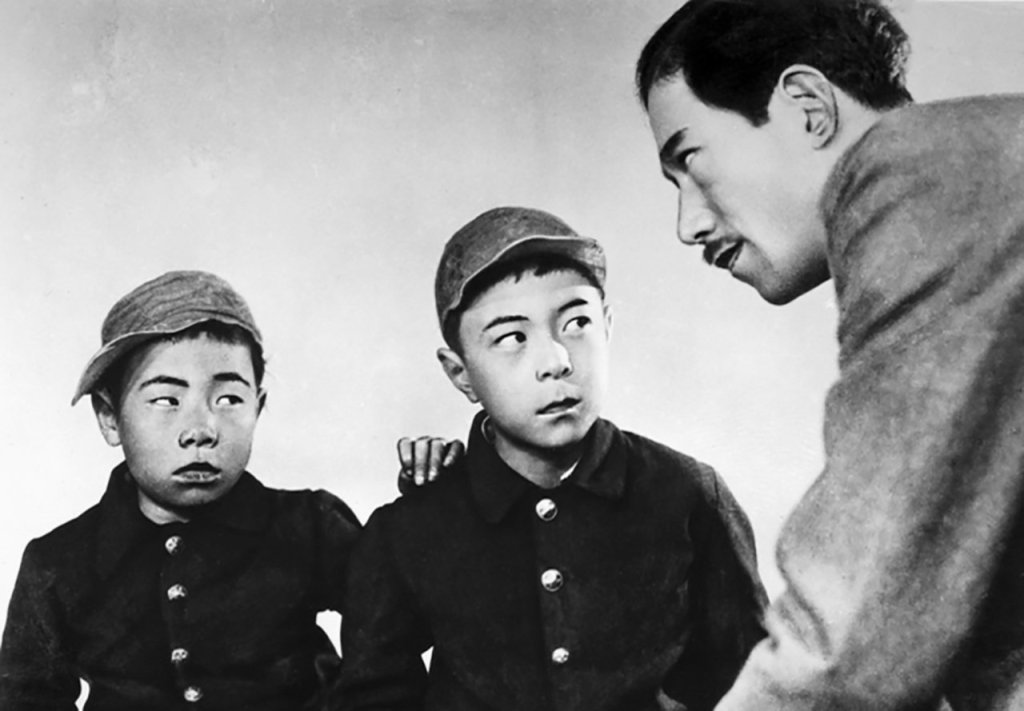
I Was Born, But… (1932)
But it’s good to know, maybe we can even translate some of it into Turkish. The next question is about what to watch or how to acquire film knowledge. As you said before, in the past, you had to live in New York or Paris to get an overview of world cinema. But today, with Criterion and MUBI and even downloading films, a person can virtually reach every film in film history. And there are also more and more films being produced. So, if someone is new and trying to get into film history, what kind of canon would you recommend, or which path should they follow?
I have to say, when I first learned about the history of film, I had to teach myself. At the time I became interested, it wasn’t just that there weren’t many places teaching it, but those that did had reactionary positions. When I became interested in film as an art form in the early 1960s, the only books that treated “Citizen Kane” treated it somewhat negatively. They would say people who don’t know much about film think it’s very cinematic, but in fact, all the techniques come from theater and radio, according to The Liveliest Art and The Film Till Now, and James Agee was down on Orson Welles also. So few books were available then on film. But in fact the books of Arthur Knight and Paul Rotha really were defenses of Hollywood. To like Welles meant, in certain ways, to challenge Hollywood, which they didn’t want to do. What became very important to me when I was first getting interested in film were 10 best lists. The first film magazine I ever bought was Sight and Sound in 1962 when they had several 10 best films lists by critics from around the world. I made it my business to try to see as many of the films that those critics had liked. I think the only way people can really learn about film history is to start with what they like and see where that takes them. There are different ways you can relate to that history. There’s no single definitive list of the greatest films that you must see, so you need to look at several.
So you think it’s justified for someone to find a niche? Let’s say someone is interested in Japanese cinema and hasn’t watched the French New Wave or John Ford films. Is it perfectly fine to acquire knowledge in that niche, region, or period and then work on that instead of having this universal knowledge because it’s almost impossible to acquire it?
Well, I think the point is that you have to reinvent the reasons why it’s important for you. It’s not because somebody tells you it’s important, but because it does something for you specifically. People are often afraid to do that because they want to defer to the experts. But in a way, you could almost say that there are no experts in film because there are so many different histories of cinema. One of the reasons why lists are so important now is because people have so many more choices than they used to, and they need guidance. I’ve capitalized on this myself. My most popular piece that I wrote for the Chicago Reader was about my 100 favorite American films, which went against the American Film Institute’s list. That piece was so successful that I ended up editing a whole book, Essential Cinema, in which I included a list of my 1000 favorite films, and that was popular as well.
Do you keep notes of every film that you’ve ever watched? Do you have a list?
No, particularly now that, in theory, I’m retired. When I was a professional film critic, I had to see every film to the end, whether I liked it or not. Now, if I find that it’s not grabbing me, I abandon it after ten or thirty minutes. Very often, I would take notes that I’d never even look at or refer to afterward. Sometimes just writing it helps to remember certain things, even if you don’t look at your notes afterward. Sometimes I don’t take notes on films I like a lot because I’m still trying to figure out how to come to terms with them.
The funny thing is, today there is Letterboxd, and you probably know that everybody is on Letterboxd, logging all the films they have ever watched. There is an account called “Not Jonathan Rosenbaum” which is posting your reviews of films that you have watched. But you don’t use it personally, I guess. Do you use Letterboxd personally?
I’ve gone to Letterboxd and I’ve sometimes played their games, but I haven’t done this for awhile. The most exciting film I saw from last year I only saw this year. It was shown in Cannes last year. The title is “Inside the Yellow Cocoon Shell.” I don’t know if you’re familiar with it?
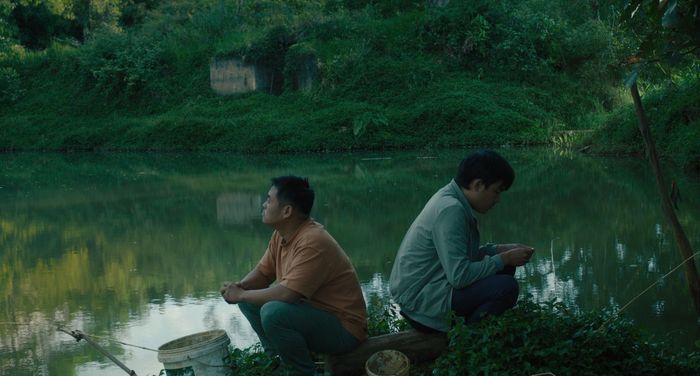
Inside the Yellow Cocoon Shell (2023)
We’ve seen it, yes. A very long film.
And that’s, to me, a real example of a film that almost reinvents the rules of cinema in ways that are very exciting to me. I’m writing a short book now on camera movement—on uncanny or disturbing camera movements. One of the editors of the series that I’m writing the book for sent me a link to this film. Otherwise, I wouldn’t have seen it. I feel I have to write about that film just because it has camera movements that seem to be subjective but are obviously not, and then you don’t know how to read them exactly
There is a debate in film criticism about the difference between a “film analysis” and a “film review.” How do you distinguish between the two?
That distinction, in a way, is paralleled by the distinction between mainstream reviewing and academic writing on film. I think it’s unfortunate that so many people in one of those fields ignore the other field when it seems to me any film critic who deserves to be taken seriously needs to be somewhat knowledgeable about both. In both cases, most of the writing is uninteresting. But at the same time, you have to keep up with it. My favorite academic American film critic is James Naremore, and he’s someone I’ve learned a lot from. Part of it has to do with the fact that he was originally an academic in literature rather than in film. I think that gives an added dimension to his work.
I totally agree, and I feel that academic writing is too analytical; sometimes it is very arcane. On the other hand, film reviews sometimes have a total lack of analysis and are just impressions and some adjectives. So it would be desirable to have more of a connection—reviews that have some analytical punch but don’t become too arcane. That’s kind of hard to find.
I understand. But in a certain way, I argue in my new collection that film criticism is an art form, which is a position that a lot of people wouldn’t agree with. And just as there are filmmakers who basically reinvent the art of cinema, I think there are critics who reinvent the art of film criticism. In a way, the best people are the ones who make up their own rules.
In all forms of criticism (film, literature, music), there is a dilemma between being subjective and evaluating objectively. Where do you draw this line?
I don’t think objectivity exists in criticism. It doesn’t exist unless you believe in God and you’re saying that what you’re calling objective is the point of view of God. But if you don’t believe in God or you’re not sure if you believe in God, then it’s pretty hard to believe in objectivity because I don’t even know what that means exactly. Objectivity means you don’t care. And if you don’t care, why write criticism in the first place? To me, the whole idea of objectivity is based on false premises.
But then it can be difficult to distinguish from taste, because obviously there’s film taste, and some critics might like Bela Tarr or Pedro Costa and consider them the greatest filmmakers. They write positively about them, but there are people who would never watch Tarr or Costa. If somebody is writing about a film that is difficult but has a very niche taste, should the critic affirm their taste or try to imagine a reader who won’t watch this kind of film?
I guess each critic approaches this problem differently. I think the best one can do regarding objectivity is to be objective about how one’s subjectivity is formed. In other words, that’s why I tend to be autobiographical so the people reading me can know where my ideas are coming from. I consider that important. I also tend to quote other critics in my own reviews, and that’s partly based on the idea that you shouldn’t look for a critic to have the last word or the first word on anything. Film criticism is a social activity, and it has a certain social function. I think that’s partly how one should judge it.
To take the example you gave about Pedro Costa or Bela Tarr: there’s a rather good film critic who writes for the World Socialist website named David Walsh. He liked my last two books and interviewed me about them, but he mentioned in his introduction that he disagreed with me about Pedro Costa and Bela Tarr because he actually thinks that they haven’t really analyzed political issues in ways that he approves of. He doesn’t agree with either their analysis or their lack of analysis about certain things. But he was very upfront about it, and that’s why he hesitates about proselytizing on behalf of those filmmakers.
But so you’re saying that it is justified to affirm your subjective point of view in the writing and also give arguments for that because in many texts about film, when you read them, you feel like that’s God’s voice. The text is not willing to admit to subjectivity, and very few people do that, like saying that “I liked it and I know it’s my opinion and my taste”
I think one could even push a certain radicalism further. It’s entirely possible that a film could be good for one person and bad and even harmful for another person. So when we assume that something is good, it does not mean that everybody should have the same taste, which is ridiculous. I think that one usually has to work out certain compromises in order to reach a broader audience, and it all depends on who you’re writing for.
And one quote from Robert Bresson, when he said, “I’d rather people feel a film before understanding it.” What do you make of this statement?
Well, it can be the way we regard people too. Sometimes you like somebody you meet, but you don’t know why, and that comes later. I think it used to be that people thought being a critic was about explaining things that couldn’t be explained, like explaining “Last Year at Marienbad.” But I actually think that what can be more valuable for a film critic is to deepen the mystery, not to solve it. The point is that if you want to deepen the mystery, that means it’s open-ended.
I think an awful lot of the way we judge art and criticism has to do with closure. If you’re looking for closure, it means you want to find one critic saying it’s great and that’s it. Close the book. Whereas another approach is leaving options open. Most commercial films are designed to have closure so that you can forget about them when you leave the cinema. As a film critic, you have to deal with forgetfulness all the time because you have to say the films released this week are important, even if you don’t like them. Then you have to forget about the films you write about this week to make room for the films next week, which are also supposed to seem important. So it’s based on a lie, basically, but in order to keep the institution of film criticism going, you have to agree to that lie because otherwise, you’re out of a job.

Pickpocket (1959)
But it’s true that we have this tendency to immediately try to rationalize what we’ve seen, and we don’t give space to that feeling. A challenge that I find is if you write a film critique right after you’ve seen the film, and if it’s a very complex thing, it can be very hard. I think about “Mulholland Drive” or “Lost Highway” by David Lynch. I don’t think that anyone who has seen it for the first time in a cinema would be able to make something out of it the next day. Repeated viewings give you more of it, so sometimes it’s hard to write about something enigmatic right away, right?
Yeah, sure. I remember one of the pieces that I wrote when I was writing for Film Comment in the ’70s. I called it “Notes on a First Viewing of Jacques Rivette’s ‘Duelle’.” That’s all I could write about, you know. I had only seen it once because I was able to see it before its release because I was friends with the screenwriter. So I made it just “notes on a first viewing.”
Nobody can expect anything more than that. And what is your view on film criticism in the age of blogs, fanzines, and the internet in general when there are so many places where people can write and read?
I actually think there was a certain period when Sight and Sound had some of the diversity that we’re looking for now, and of course, it was limited by the fact that it was supported by state money. They didn’t have an agenda. So much of what happens with many magazines is that they end up with a group of writers they like, and then those are the only ones who write for the magazine. They don’t even read or pay attention to other things submitted to them, and I think that’s unfortunate. In a way, the ideal for a magazine is to do several things and not necessarily conform to one point of view.
And when you say that there is much more bad writing today, a related question is: what is a good way to learn how to write well about film? I mean, you mentioned this class that you took over about film criticism. Do you think it’s advisable for someone who tries to learn how to write to read famous critics and understand their style, their approach, their argument, and modify it?
Sure, if you understand what the style is doing. It’s true that what I could have done when I had students who imitated Manny Farber, who was their former teacher, is that I could have said, “Okay, imitate him, but know that you are imitating him. And write a critique also of what qualities you find you are exhibiting yourself because you’re imitating him.” When I was an English major in college, if I was really influenced by something, I would sometimes be assigned to write a parody of that writer. Because it’s a way of almost clearing it out of your system if you start imitating them. So I think that can be a good thing if it’s done as part of an overall larger method.
So it is good to find some examples and be self-aware of how they wrote and how you write because some people just start out of the blue—they have no reference and just write whatever they feel, and that’s probably not sufficient.
It’s funny, there is even a kind of writing designed to express what you’re feeling. But then there’s another kind of writing which is exploration. You begin a sentence not knowing where it’s going to end, and the writing becomes a tool for exploration. I think both of these ways of writing are legitimate. Maybe because I had a background of writing novels before I wrote film criticism, in a certain way, what was most exciting for me in writing a novel was having a character suddenly do something that I wasn’t expecting. In other words, I feel like I’m following my own unconscious as another spectator, and that can be very exciting. The same thing can happen with criticism in a way because sometimes if you get really involved in a film, what you wind up doing as a writer is reproducing certain stylistic or thematic traits that you weren’t aware of before. That can become quite interesting–what could be called mimetic criticism.
And do you think the style of writing about film has evolved over the last 50-60 years. Was there a higher standard in the past? Has it changed?
Yeah, there are different standards. I like reading James Agee because he was a great writer.But I don’t know if he was a great film critic. Sometimes he was, in his best pieces, but a lot of the time he was very bad in the sense that a film would do really interesting things, and he would be completely blind to it. There are different reasons for reading different critics, and I think that sometimes it’s the subject matter they’re dealing with that makes what they have to say interesting. Sometimes it’s style.
I differ from a lot of my colleagues in thinking that Otis Ferguson, whom a lot of Americans see as the ancestor of Manny Farber and who also wrote about jazz, is totally uninteresting. Nothing he’s ever written have I found interesting. Even though I’m a jazz fan and a film fan, I’ve never learned anything that I can recall from either his jazz criticism or his film criticism. But other people might feel differently, and in fact, one of the things that I would ask them to do is tell me why I should like Otis Ferguson more than I do. Show me why I should place a higher value on him.
Whereas, for example, a film critic that everybody ignores, whom I think is much more interesting, is a figure from the 1920s named Harry Alan Potamkin. He was an American Marxist and also someone who wrote poetry and interviewed people like Carl Dreyer. He was interesting in a lot of ways. Usually, whenever you acknowledge something, it’s because you can use it. Nobody’s interested in the truth for its own sake. It’s always for the sake of something else that you need or want. Therefore, there are a lot of different justifications for a particular critic’s writing, and a good analytical writer would learn what some of those reasons are.

So it’s about finding the right style for the right approach, for the right objective. One question about the connection between writing and making cinema: if we take the example of the French New Wave and Cahiers du Cinéma, people started to write and analyze cinema and then started to make films themselves. How do you think about this connection between writing and making cinema together?
Well, I have a particular belief that I keep reiterating, but I don’t know if anybody agrees with me about it. Which is that Godard’s filmmaking often becomes, in certain works, film criticism. In other words, he transforms whatever he’s imitating into something that’s Godardian. By doing so, he teaches us something about the film. Another person who does that, who wasn’t even a writer, was Alain Resnais. Alain Resnais knew a lot about the history of cinema. This isn’t widely known, but when Resnais was a teenager, he introduced André Bazin to German Expressionist cinema, to people like Fritz Lang. When you see his films, you can actually see what he learned from other filmmakers, even from MGM musicals of the 1950s when he made a musical.
On the other hand, you have Martin Scorsese or Paul Schrader or Brian De Palma, including the 360-degree shot from “Vertigo.” That doesn’t teach me anything. In something I’m writing now, I actually compare it to a dog pissing on a particular piece of ground to say, “This is mine.” I don’t understand why an homage is supposed to be interesting or valuable. I don’t know what it’s valuable for, just to say, “I like this” without explaining why you like it or expressing your like in a way that affects your interpretation of it.
The funny thing is that I actually think that 360-degree camera movement, which is always a paradox because it usually involves keeping the figures you’re circling in the foreground, can be traced back to Carl Dreyer’s “Ordet.” Maybe even Hitchcock got the idea from “Ordet” in a completely different context. You don’t usually find this kind of genealogy. It just seems to me that so many filmmakers are addicted to showing a baby carriage going down steps to show that they like Eisenstein, which is kind of dumb, actually.
It’s not just about showing off or showing your knowledge; it’s about productively transforming or criticizing it.
Yeah, exactly. So I think that Rivette did that to a certain extent. Godard does it. Oddly enough, Straub and Huillet don’t do it, or at least not in ways that I can recognize. I mean, he’s taught me a lot about Chaplin, but through his interviews, not through his filmmaking.
About Chaplin being the best editor because he knows where a gesture begins and ends.
Yeah, which is really great and nobody else thought of that. But even Godard pointed out that, in a certain period, Eisenstein should be celebrated more for his sense of composition and angle rather than for montage. I think that if you take that approach, then something like “Ivan the Terrible” is just as valuable as “Battleship Potemkin” or “October.” Whereas from the other point of view, if you say it’s all about montage, then “Ivan the Terrible” is an uninteresting film because it doesn’t do anything very interesting with montage. Obviously, that’s a very narrow point of view.
And what I really love about “Ivan the Terrible” is that it’s a film that completely destroys any distinction we might make between high art and low art. It’s both Walt Disney and very intellectual at the same time.
Another question about writing, and this one is about experimental cinema. This is very challenging because experimental films are already abstract and non-narrative, and writing is a form of abstraction. So to write abstractly about an abstract film—if I think of Stan Brakhage and his painted films or Michael Snow—it’s very hard to find some ground to hold on to. How do you approach writing about experimental stuff?
What I find kind of problematic about most writing on experimental cinema is that it focuses on how to think about experimental films but not on how to watch them, which is different. I think we need much more of a sense in the writing about what it’s like to experience the films and what the implications of that are. It seems to me that what’s wrong with a lot of academic writing about cinema is that it’s really just about how you think about it. And you start getting involved in theory, which frankly never interested me as much as it interests a lot of academics.
You think it should more explicate the immediate experience of watching that experimental film?
Not necessarily explicate it, but inform it in some ways. I’ve only seen “La Région Centrale” once, but I remember somebody saying that if it’s really hard to sit through, one should start moving his eyes in the direction the camera’s moving or in the reverse direction. I can’t remember which, but at the time it seemed like that was very helpful. I think we could use more of that kind of advice in criticism.

La région centrale (1971)
You’ve been on film sets and you were an extra in a film and an assistant of Jacques Tati. Have you ever thought of becoming a filmmaker yourself, directing or writing a script, or has it never occurred to you?
No, it occurred to me, but the only time I ever wrote a script was when I was paid to adapt a novel, and I knew at the time that the film would never get made. So I didn’t even type a carbon copy of the script because it was never going to be made. I always like to think I could work on a film if it was with somebody that I liked. What I love about writing is that all you need is yourself and a piece of paper or a laptop. You don’t need to depend on all these other people and money and so on. That’s one reason why becoming a filmmaker was less attractive because you have to spend your life finding producers and talking business and all of that kind of stuff. I’ve always had a dislike and no aptitude for doing business.
There are almost more constraints than freedom, in a sense.
Right, that was something that Orson Welles complained about a lot because he was a great filmmaker and a terrible businessman who didn’t even know how to add and subtract. But it is interesting because you could say that’s why he made so few films. Yet, he made approximately the same number as Kubrick. Kubrick is considered a success, at least in the United States, while Orson Welles in the United States is considered a failure, and yet they made the same number of features, actually. So I find that kind of interesting.
Why have you never published the novels that you’ve written?
I couldn’t find a publisher at the time. I don’t think I tried with all three; I tried with the second and the third. Maybe I could have tried harder and eventually gotten them published, but I don’t know. There were no takers, that’s all I can say when I sent them to some publishers.
And then at one point, did you stop writing literature yourself?
Well, I basically, consciously or unconsciously, try to bring literary writing into my criticism. The book on camera movement that I’m doing now—the editors of the series have encouraged writers to do experimental things. Basically, it was okay for them to make it literary. You know, there are all kinds of ways you get judged in the way you are edited. Most editors think that it’s bad to use the word “I” too often, to speak in the first person. Whereas my writing depends on that. But it also depends on people hopefully not becoming me. It’s like I use “I” as a springboard, as an airplane, not an airport, to paraphrase Godard.

And then one last question: this is about experimental film collectives like Anthology Film Archives and Jonas Mekas and Ultra Dogme, Othon Cinema, Sabzian today. What do you think these collectives contributed to filmmaking or film criticism?
Well, I think they contributed a certain purity to the notion of a film as an art form. Certainly, Anthology did that, even though I had quarrels with some of their choices. I don’t understand the logic of including Leni Riefenstahl among the greatest films ever made but not including Fritz Lang or Mizoguchi, etc. Again, it’s one critical point of view that usually brings these collectives together. They’re not in every case equally fruitful, but many of them are.
But do you think that was a product of its time? Because it’s hard to imagine this kind of collectiveness from the ’60s in New York City happening again today. I mean, I just know that from reading about it, that it’s hard to achieve that spirit again today —it seems very hard.
Oh, if we’re trying to do something that was done before, it’s a wrong idea to begin with. You have to find reasons you have now for doing what you’re doing, not creating something that is similar to what somebody did before. I’m an existentialist about this. You have to find what you need now and why you need it and proceed from there.
But it seems like one of the traps of our time is that it’s too solipsistic, too individualistic. Everybody can watch everything at home, and you go to a festival, watch a film, and then go home. But film as a social form of living or as a communication tool for sharing ideas and doing something together —that’s not a wrong thing to try to do again, but it seems like times have changed.
Well, yes, one thing that has changed is that film is a social art in a different way from what it used to be. It used to be social because you were seeing films in the same room as other people, and theoretically, you could talk with them after you saw the film, although in most cases, you didn’t. But theoretically, you could. I remember when I saw “L’Avventura” for the first time in New York, I had to wait two or three weeks before I met somebody else who’d seen it and could talk to me about it. So I was sort of cut off from a social discourse about it. Whereas now, if you see a film at home, you can immediately find other people to discuss it with on the Internet. So I think it becomes easier for the viewer in a lot of ways. It’s still social, but the way the social aspect expresses itself is different.
This is the first time that an interview with you will be translated into Turkish and published in Turkish. Do you want to say anything to the readers of Othon Cinema?
Not in particular. I mean, I’ve only been to Turkey once, and my visits to Istanbul and Ankara were brief. With my friend Ehsan Khoshbakht, we were presenting jazz films and then just hanging out in Istanbul. There was a silent film festival there that we attended a little bit. I think there’s a part of me that is interested in national cinemas, but another part of me would like to destroy the idea of national cinema. To me, the greatest filmmakers are the ones that somehow transcend the countries they come from. Hitchcock was more than just an English filmmaker, and Kiarostami was more than just an Iranian filmmaker. And if you think about all the great filmmakers who emigrated from Europe to America, you have all these figures with dor multiple nationalities. But at the same time, I’ve learned an awful lot about Romania from Radu Jude, so there are good reasons for associating him with Romania.
But even though you’re against the idea of national cinema, what is your impression of Turkish cinema and Turkish directors?
I haven’t seen enough to have an impression. There are plenty of national cinemas that I know next to nothing about, and Turkey is one of them.
Because with Turkey, the people here sometimes have the feeling that Nuri Bilge Ceylan, the one who won the Palme d’Or a few years ago with “Winter Sleep,” is like the only name that represents Turkey abroad. If you ask anyone about Turkish cinema, they can only give that one name. It’s a good and bad thing probably, because he’s one of the best, but also in his shadow, all the others disappear.
I think this is a problem, particularly with the way that America, which is the most provincial country, is the most influential when it comes to promulgating film taste. It gets very annoying —the idea that you can only have one figure from certain countries at a time. First Spain is Luis Buñuel, then Spain is Almodóvar, but there are all these other interesting filmmakers who are ignored.
Thank you very much for your time and for your answers.
Interview: Matthias Kyska, Enes Serenli
Visual Design: Büşra Yavuz



 Othon Cinema