Ambivalence and Enigma of the Image
To interpret is to impoverish, to deplete the world—in order to set up a shadow world of “meanings.” It is to turn the world into this world. (“This world”! As if there were any other.) The world, our world, is depleted, impoverished enough. Away with all duplicates of it, until we again experience more immediately what we have.
Susan Sontag, Against Interpretation
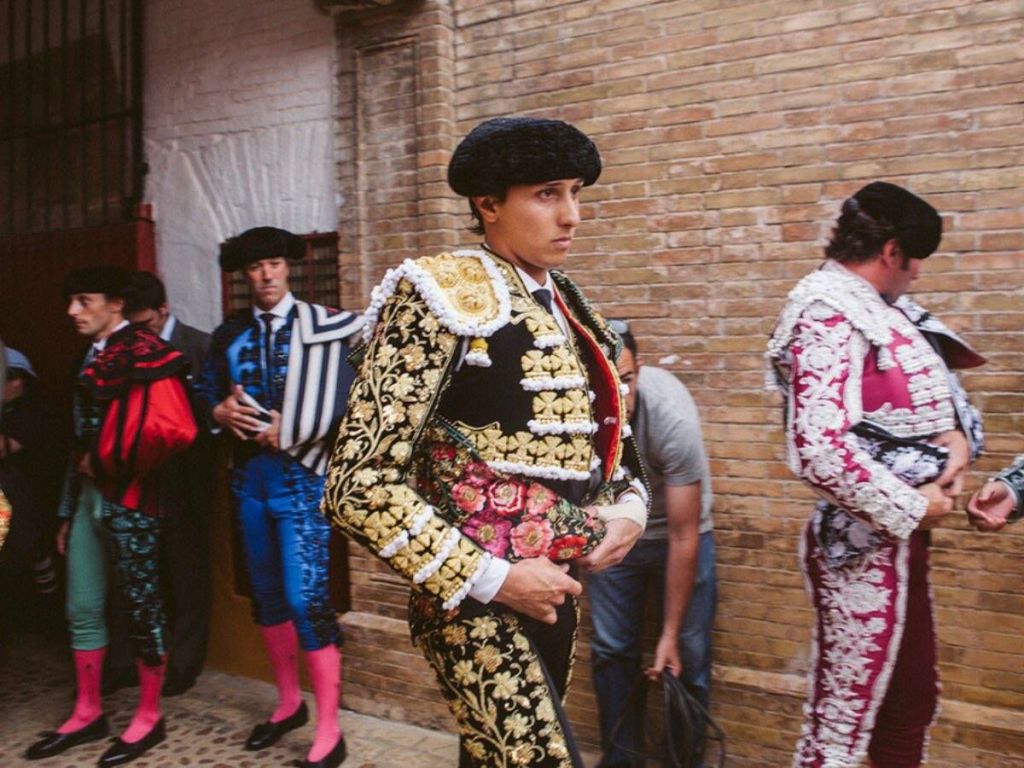
Tardes de Soledad
In this essay, I will first focus on Albert Serra’s latest film, the documentary Tardes de Soledad (2024), before attempting to analyze Serra’s general understanding of film and the creative process associated with it.
“Beauty is always unjust,” the director said in a conversation about his latest film, as it reveals human weakness — it makes us vulnerable when it captivates us — and it is never fair. Transferring this thought to the aesthetic of images in film and media reveals a fascinating paradox: even images of violence, whose moral implications we reject, can develop a mesmerizing beauty that enchants us and leaves us with an ambivalent feeling. “Let the film corrupt you in the most beautiful way,” says the director.
The protagonists of Tardes de Soledad are, on the one hand, the Peruvian Andres Roca Rey, one of the world’s most famous bullfighters, and on the other hand, his cuadrilla, a group of second-tier fighters who assist him during the initial phases of the bullfight. The only settings of the film are the interior of the torero’s limousine, the bullring, and the hotel rooms where Roca Rey changes before and after the fights.
The film is a purely observational documentary that offers no commentary, but instead shows bullfighting in all its monotony and violence. Roca Rey himself is an impressive figure who, with his baroque costumes, his passion, and his fighting spirit, delivers an acting performance that no professional actor could have achieved. Putting actors under extreme pressure is one of the main methods in Serra’s cinematic process — a method I will discuss in more detail later.
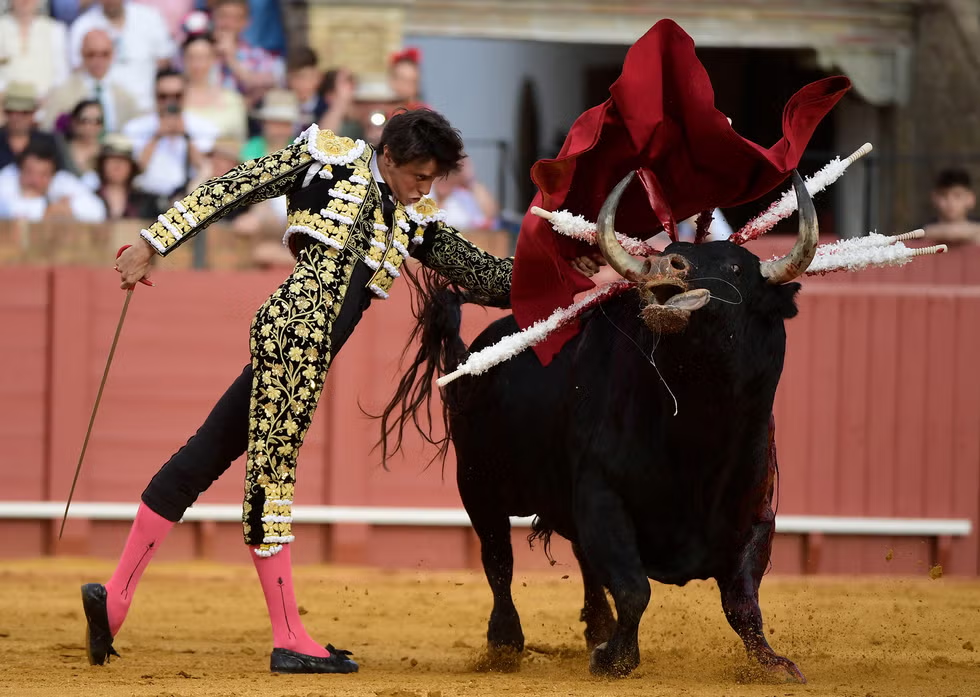
Fascinating and disturbing at the same time is the protagonist’s absolute determination in the bullfight, who views the fight to the death almost as a divine mission, when before each death-defying battle he prays for the blessing and protection of the Virgin Mary. Despite the many fans and the exaggerated jubilation of his Cuadrilla, who praise Roca Rey as the bravest of all men what ultimately remains is his solitude and the mystery of his true motivation.
In our modern age, in which ritual and death have been pushed aside, bullfighting appears as one of the last remaining relics. The phrase “Life is worth nothing,” spoken by a torero in the film, evokes Georges Bataille and his thesis that ritual is a means of coming into contact with death — the ultimate limit of life — without actually dying.
The form of the film structurally mirrors the bullfight itself, presenting a total of six bullfights that unfold through identical rituals and repetitions. Despite the brutality of the fights, the film possesses a baroque and sculptural aesthetic, created through the colorful costumes, the white-armored horses, the lances, and the swords. The red blood on the light-colored costumes and the white horses produces striking textures, while close-ups of the bulls’ faces in the moment of death convey a certain poetry of life fading away.
The cinematography focuses on small, defined sections of the bullfight, deliberately excluding the audience in the arena. Serra’s footage differs greatly from televised images of bullfighting, as it was shot with three cameras from unusual angles and emphasizes close-ups. These counterintuitive framings invite reflection on cinematic grammar itself. One of the film’s most striking moments is the opening shot of Tardes de Soledad, in which we, as viewers, gaze directly into the eyes of a young bull outdoors for an extended time, uncertain whether we are the observers or the observed. The simultaneous use of multiple cameras from hidden positions is a key feature of Serra’s work and reflects his idea of a “cinema of the invisible,” which I will discuss further in this essay.
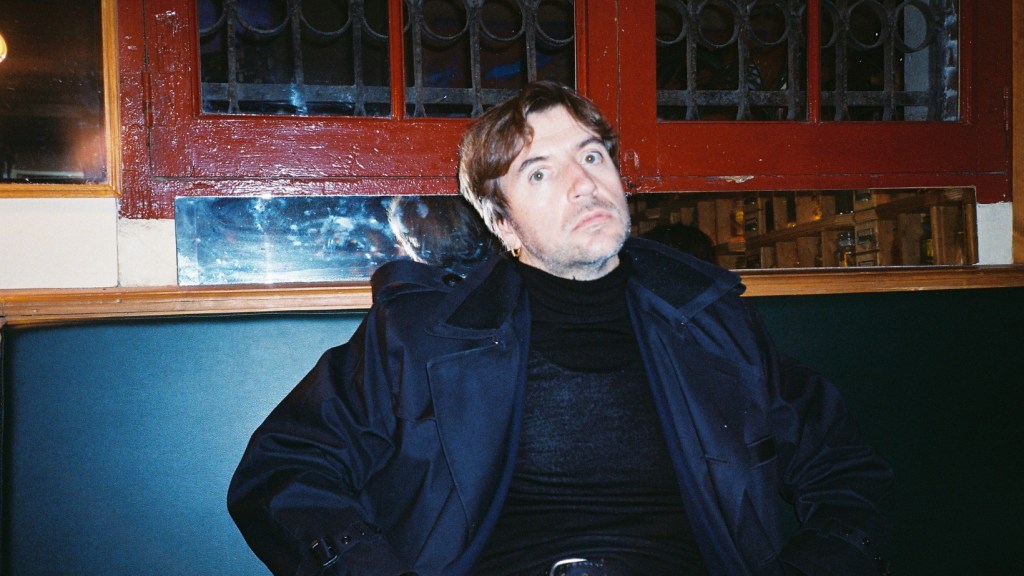
Albert Serra (©Claudia Robert Malagelada)
Cinema of the Invisible
Serra defines his method of filmmaking as a cinema of the invisible, a method that for him became possible only through the digital camera. Serra believes that digital cameras function like “eyes” that are in some ways superior to the human eye. While human vision is always a “selective” vision, a camera captures everything within the frame. Normally, films are composed of planned and therefore expected images, and the director often takes as many shots as necessary until the filmed image matches the image he has imagined, whether through the script, the storyboard, or his own visual intuition. Serra takes exactly the opposite approach by not planning or intuitively envisioning a single image of his films in advance.
Instead, he films — often with multiple cameras simultaneously — hundreds of hours of footage, trusting that his “digital eyes” have captured unique moments that reveal something entirely new, something that could never have been planned or expected. In this sense, his shooting process resembles a performance that unfolds almost without directorial intervention, capturing the pure presence of the moment. Serra communicates very little with his actors on set, which presupposes a great deal of trust on both sides. This “allowing” of the unexpected keeps the creative process alive and the images free.
It is a balance between precise planning (costumes, locations, selection of actors) and spontaneous chaos, in which the enigmatic is given space to emerge. For Serra, filmmaking is about fully embracing the risk of the inevitable during shooting while later exploiting all the finesse of digital technology in the editing process. His films are not born from the script but from the camera itself; the finished film is something new and incomparable to any prior reference point.
The Enigmatic Nature of Images
Serra is fascinated by the ambivalence and enigmatic quality of images that exert an immediate emotional impact on the viewer rather than conveying a concrete rational idea. His films repeatedly pose the question of the suggestive power an image can possess. An image is more than a representation or an illustration — it is an open field where truths and contradictions can coexist. Serra aims to overwhelm the viewer with impressions, without triggering the urge for intellectualization. Instead of prescribing a fixed interpretation, he relies on the intuitive power of moments that often reveal themselves only during filming — and even more so during editing.
This is where the political — or rather apolitical — dimension of Serra’s cinema comes into play. Serra uses his unique cinematic method not only to create enigmatic images but also to avoid ideological or moral positions, seeking to attain a kind of “innocence” or “zero point.”
This “zero point” is a space where the director and actors can create images together that are not suffocated by predefined meanings. Paradoxically, Serra achieves this “innocence” through threat and vulnerability. For Serra, actors must always be subjected to extreme pressure, as every actor holds onto an idealized self-image and tries to maintain it during filming. Through the loss of control and filming from perspectives that the actor cannot anticipate, vulnerability emerges — and with it, authentic, innocent images.
This unpredictability applies not only to the actors but also to the viewer, as Serra’s films reflect on the subjective dimension of every image. In contrast to conventional film grammar — where, for example, a shot/reverse shot setup positions the viewer as the subject of the camera and creates a logical sequence, as in dialogues with alternating perspectives — Serra often crafts arbitrary sequences in which no clear subject remains. The meaning of an image thus arises not only from what it shows but also from who is watching and from which perspective.
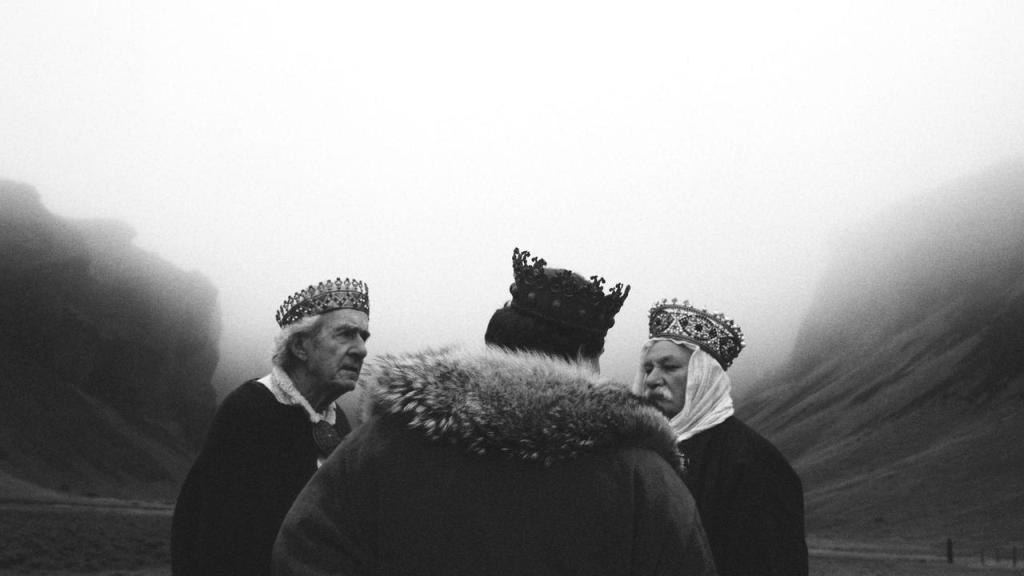
Birdsong (2008)
The Role of Time
Alongside the ambivalent image and the innocent performance of the actors, time itself plays a central role in Serra’s films. His films are not composed of a simple sequence of scenes but are shaped by a deliberate engagement with temporal structures. In order to shift moral and emotional interpretations, Serra manipulates the perception of duration, rhythm, and transience. This creates a tension between the film’s temporal unfolding and the viewer’s own experience of time — something particularly evident in his earlier, very slow films such as Honour of the Knights and Birdsong.
This approach has been made possible by digital technology, which allows Serra to analyze, rearrange, and interlink an enormous amount of footage in complex ways. His editing process is not about breathing “life” into boring material, but rather about taming the energy of the images while at the same time giving them coherence and focus.
Presence versus Plot
For Serra, a “dramaturgy of presence” operates through the presence of the actors, their charisma, and the atmosphere created by images and spaces. His films contain only minimal plotlines, which are carried almost entirely by the mere presence of the actors, the costumes, and the mise-en scène. While the framework is set by the director, the dynamics that emerge once presence is given space are unpredictable — and it is precisely this unpredictability that lends his films their particular intensity.
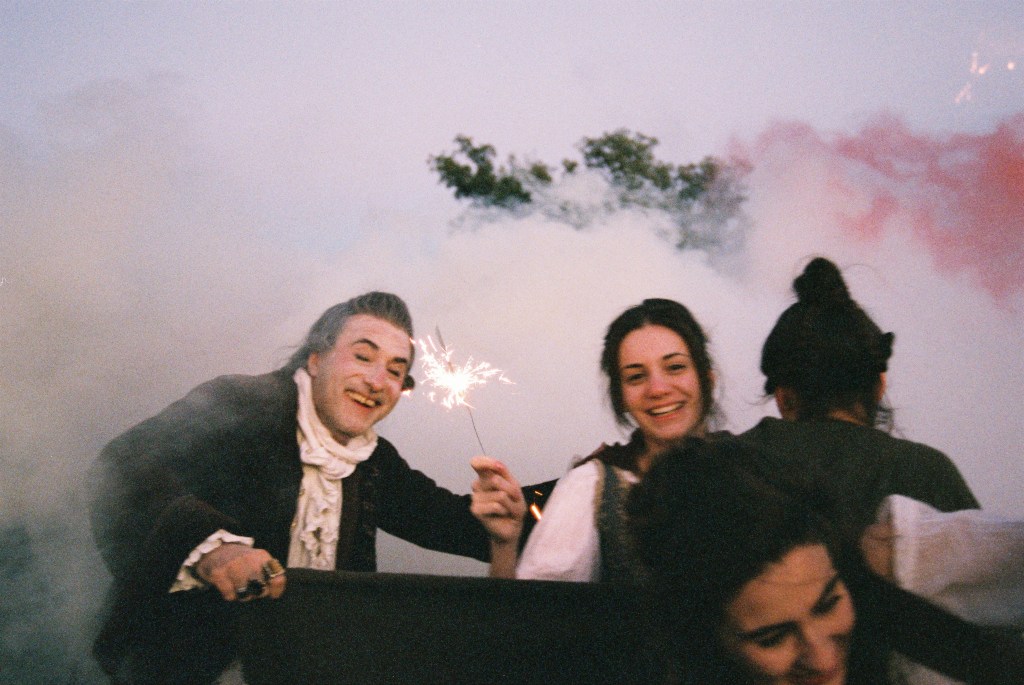
Story of My Death (2013)
The Three Phases of Albert Serra’s Filmography
In conclusion, I would like to attempt to find a common thread in Albert Serra’s work. His feature films can be roughly divided into three phases. The first is what might be called the literary-naturalistic phase with the two early films Honour of the Knights (2006) and Birdsong (2008), as well as Story of My Death (2013). In these films, Serra deals with literary figures such as Don Quixote, the Three Wise Men from the Bible, and the legendary figures of Casanova and Dracula. These are by no means conventional film adaptations of these literary materials. The literary templates serve Serra only as a starting point to create a naturalistic world within this literary framework with his actors and images. Serra himself says that classical literature is for him only an indirect means of legitimation, as it is easier to work within established classical topoi.
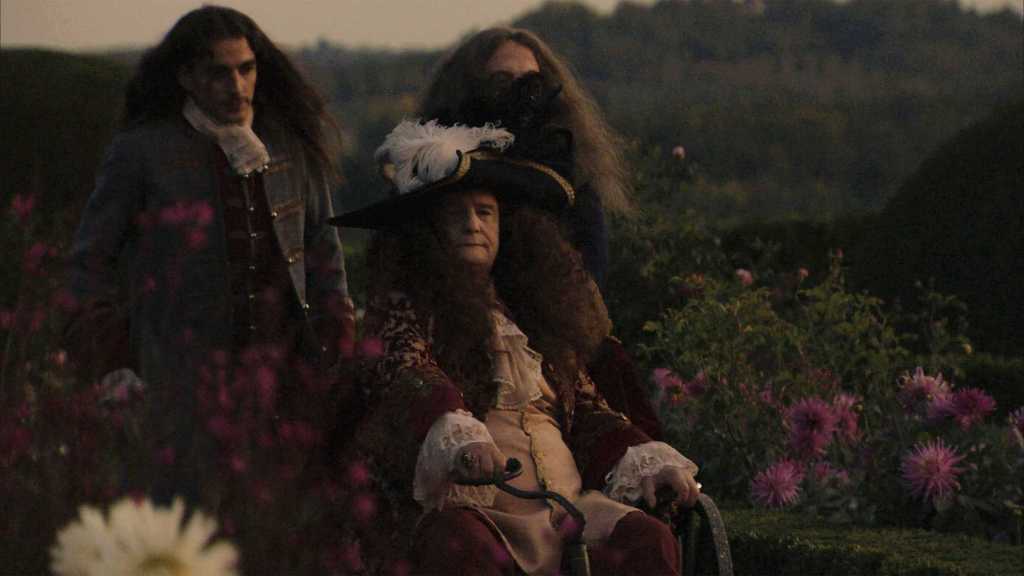
The Death of Louis XIV (2016)
The second phase is the historical phase with the two films The Death of Louis XIV (2016) and Liberté (2019). Here too, Serra is not concerned with creating authentic historical films (even if the set design and costumes are very elaborate and authentic), but with using the historical settings as an empty canvas to negotiate contemporary or timeless themes. In The Death of Louis XIV, Serra shows the absurdity of politics by depicting the strictly ritualized last days of the longest-reigning emperor in human history in their banality. And also in Liberté, set in the 18th century and showing a night of sexual excesses with aristocrats who have fled from France, it is about the general question of human desire, how it sets boundaries and transgresses them – a theme that has lost none of its relevance.
The third and final phase I call the political phase, which begins with Pacifiction (2022) and continues with the film Out of this World, which Serra is currently working on and which will deal with fictional peace negotiations between Russia and Ukraine. Serra thus continues his examination of the absurd in politics, which he began in The Death of Louis XIV, and shows in Pacifiction a vision of the absurd in contemporary world politics. In a South Seas paradise that is still a French colony, nuclear tests are to be carried out again. The protagonist of Pacifiction, himself actually a high-ranking politician, gets caught in a whirlpool of paranoia and believes that an invisible political power of his own state is directing the true fate of world politics. The brilliant title of the film already reveals that it is a fiction, but perhaps contemporary political reality cannot be understood through a realistic representation, but only through an absurd fiction that shows us what politics really is.
In one of the most complex and difficult conflicts of our time, the war between Ukraine and Russia, the question of truth and rationality is often asked, and it is astonishing that Serra dares in his next film Out of this World to formulate his own perspective on an actively existing conflict with a new fiction.
Living Ambivalence Instead of Closed Meaning
Serra’s great goal in all his films remains to maintain ambivalence in the images. It is the refusal to commit to a definitive meaning, as the meanings are meant to unfold only in the individual perception of the audience. Thanks to digital technology, Serra can radicalize this openness even further. In film, and especially in editing, there are virtually endless possibilities to mix time, images, and their sequence in such a way that no clear interpretation imposes itself. The result is a cinema that one either accepts or rejects – an uncompromising invitation to engage with pure presence, the enigmatic, and a deeper truth that emerges from fiction. This attitude gives rise to images that are hardly imitable in their originality and are therefore so fascinating.
Matthias Kyska



 Othon Cinema