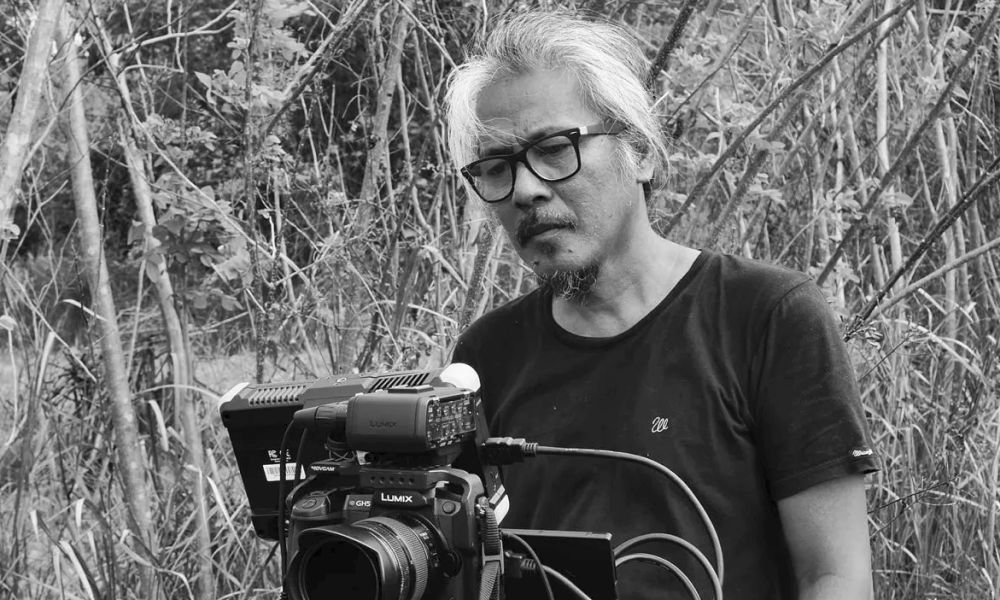
First of all, we would like to talk about your filmmaking process. Sometimes, you mention that you enjoy working with uncertainties. Could you explain how that works in your creative process? How do you balance planning in advance with allowing room for improvisation?
It’s always a mix of both. Even if you’re not consciously planning your film, in the back of your mind, you’re already creating something in advance, especially when an idea comes. You’re creating something that is vague in a way. I sometimes work with scripts as well. I’ve made four films in a studio. But for me, it feels limiting when everything is ready and planned, when everything is manicured, so to speak. It takes away the challenge, and I want to be challenged. That way, I can discover new things during the process.
So, you prefer the uncertain approach?
Of course.
When you said you already have something in mind before starting the film, has it ever happened that things didn’t turn out as you imagined and something else came up instead?
Yes, it goes in so many directions. Every nuance, every movement, the wind, the actors, sometimes when there are emotionally charged people, it creates something—it triggers something. The so-called muse comes from there. You go to the shoot, cross the street, and see something, and it triggers something. It happens a lot. In my case, when I’m shooting, I enter a zone where I become incredibly sensitive to so many things.
Many filmmakers are always afraid that they don’t have enough footage to construct a film. Are you ever afraid that you don’t have enough for a whole film?
This fear is always there. But we can go back. Sometimes we do re-shoots—we have that kind of luxury. I don’t work within a strict timeline like “seven days of shooting and that’s it.” If I miss some footage, we go back and shoot more scenes. Sometimes, we even change the whole thing.
So, you keep your shooting schedule flexible?
It’s very fluid and flexible.
How long does the shooting of one of your films usually take?
With my film Evolution of a Filipino Family, we shot over 11 years.
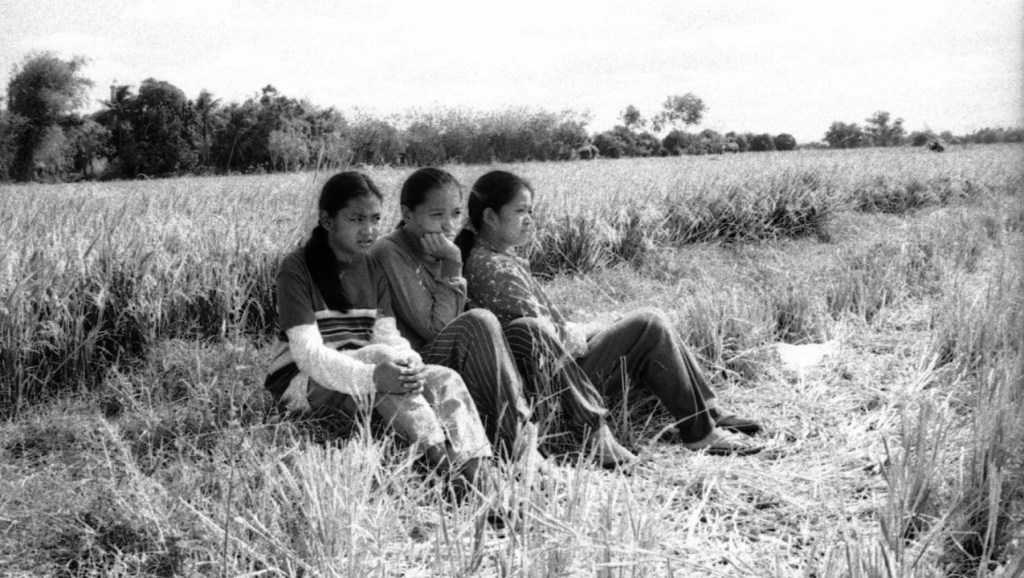
Evolution of a Filipino Family (2005)
That’s probably an exception. But with your other films?
Usually, including preparation, about three months. If I feel we need to shoot more, we go back until I feel it is sufficient.
But before the shooting, you do write the scripts, don’t you?
I write the scripts every day. I wake up at dawn and write the script for the day. Then I give it to my assistant director who organizes it.
And you also write the dialogue?
Yes, I’m very disciplined with writing dialogue and describing the scenes.
And do you give your actors freedom for improvisation?
Sometimes. But most of the time, they like their dialogue and follow it. Occasionally, they’ll suggest small changes in how they deliver their lines, and that’s fine. We don’t always shoot every day—sometimes we shoot for a few days and then take a break. Usually, we shoot four to five scenes per day. And we don’t overwork, so I can rest and wake up the next morning to write the script. It also gives the designers and costume department time and space to create something. Sometimes we rehearse the actors for their dialogue.
But your actors must also accept this spontaneity in your process.
Yes, they understand the process. Most of the actors I work with have been working with me for a long time. For the new ones, we give them information about the process—frame by frame, take by take. Actors are usually used to lots of cuts during takes. But at some point, they adjust to my process.
But when you have the initial idea for a new film, you do write a treatment, right?
Sometimes it’s just a synopsis, a summary. Then we need to research the location and find the actors. When we start shooting, I’m already familiar with the location. It’s important that I see the location first.
And the cinematography, do you plan it in your mind? When you research the location, do you feel that it can become a cinematic space?
Yes, once I see the location. Unlike others, who storyboard everything and have sets. It’s easier when you have all those people doing the storyboard and preparing the set, like a team of 35 people in the camera department.
You are your own director of photography, right?
Yes, in most of my films I do the hard work. If it gets overwhelming, I ask one of my friends, cinematographers like Larry Manda or Toto Uy, to come and assist me.
And your production process and its economic aspect—some filmmakers spend years just financing a film, but you’ve made so many films on a regular basis.
Actually, we don’t need much money.
Do you always have the same crew?
Yes, it’s just me, the camera, two people in the design department, and two people for sound. That’s it—that’s the crew. We just ask for help from people when we go to a location.
But everybody gets paid?
Of course, there’s good pay, because there are so few of us in the crew. In fact, our pay is even higher than in big productions because of that.
But from the success of your films, do you make enough money for the next one?
Well, there is support now. People are supporting me. Right now, we’re doing a film with support from the Spanish Arts Council. And a good friend always lends me money when I don’t have enough. Occasionally, I have to use my own money.
I always visit locations first before writing. The location has a huge impact on the story. I don’t work like others who storyboard everything or build sets. My process is different. Once I see the location, I start writing, and it shapes the way the film unfolds. I don’t spend two or three years looking for a budget. When I have an idea, it’s important that I shoot it right away and work until the end. I want to capture the energy of the idea while it’s fresh. I don’t need millions; that’s just a waste of time.
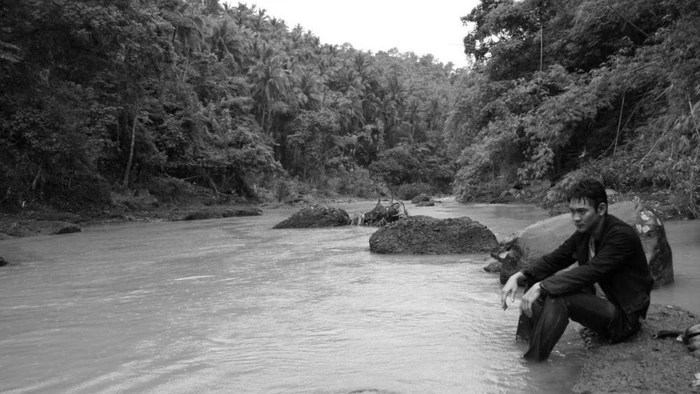
Melancholia 2008
As you said, you’ve really built a crew and infrastructure that suits your process.
Yes, I have my own equipment—my own camera and microphone.
Which camera do you use?
I’ve been using the Lumix GH series. Sometimes I use the Sony A7 SII or SIII. For the last film I shot, I used the Fujifilm XH2, which is very good. But Lumix is always the best. It’s a filmmaker-friendly camera—you don’t need much light. I mostly use natural light. Sometimes, when it’s very dark, we set up a small lighting rig. We check the sources of light, like opening a window and using that. For sound, we have one recordist and one boom mic operator. And as much as possible, I use diegetic sound. I don’t use soundtracks in my films. We always record ambient sounds.
What about the editing? How long does it usually take?
Sometimes a film is so demanding that it can take one to two years, like Evolution of a Filipino Family. And sometimes just one week if I already know what is going to happen. With most films, I do three different cuts to choose from and analyze them over and over. Mostly, it takes one or two months.
Do you prefer to have hundreds of hours of footage, or are you more selective when shooting and try to capture only what you will definitely use?
Usually, we do one or two takes, and it’s enough. If I know I’m not getting what I want, we do more takes, especially if there’s an issue with the actors. I don’t throw away anything because in editing it can be different. Some takes that you think are bad might actually work better for the flow of the story once you make the cuts. Don’t throw away any footage! It can help in your editing.
And now some questions about your idea of time in cinema. First of all, your films are very long—both the duration of the shots and the overall film. What is, for you, “the right length”?
There is no “right length” in cinema for me. It’s beyond the conventions of commercial cinema, where you shouldn’t exceed two hours. In my films, I don’t think about length. I just shoot and shoot and decide later in the editing whether the right length is 5 minutes or 14 hours. Sometimes it’s intuitive during shooting, and sometimes it’s premeditated if I know a scene is going to be 5 minutes. But my shooting system is always organic, open, and free.
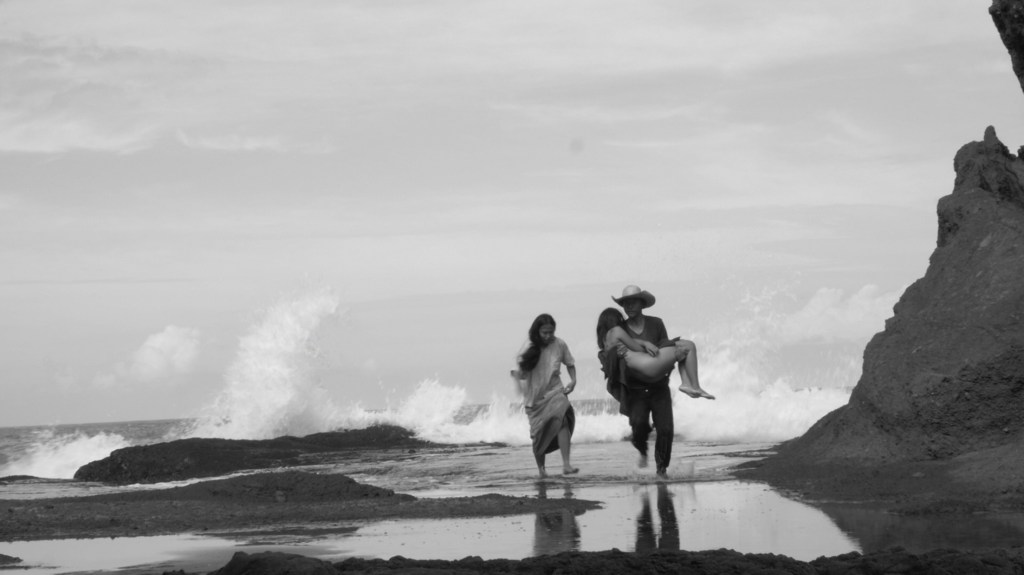
From What is Before (2014)
What do you think about the difference between time in real life and in cinema? Is time necessary for a story to unfold?
In film, there is already that convention—time is defined by following the protagonist’s action. In films all over the world, time is subordinated to the movements of the protagonist. But my cinema is very elliptical sometimes; there are ellipses, and it can go anywhere. I don’t care about having real plots—sometimes there is a plot, and sometimes there isn’t. I give more space, which is why my films tend to be long, sometimes 8 or 11 hours. They become novelistic in a way, offering more chances for the little things to be noticed. Even the small gestures of the background actors are important.
You want the viewer to really enter the world of your film.
Yes, my films are immersive. You see things beyond just following movement or sound. In some films, the soundtrack is so imposing and manipulative, even exploitative—it manipulates your emotions, and you follow that. I try to subvert that in my cinema. Like in a novel, I want to give the viewer freedom. Of course, you can’t escape manipulation in cinema because you’re shooting something and editing—it’s a copy of life. When I’m working, I just want to get to the truth—that’s the struggle. To have a semblance of truth and reality. You’re inventing a universe, and that is cinema.
But you want the fictional element to be as minimal as possible?
Yes, I try to do that, at least in a dialectical way. Be an observer and observe. That’s why the frames are very static, there are no close-ups. You are watching, not manipulating. I don’t use a conventional sequence of cuts, where I show information one after the other or do shot/reverse-shot with actors’ reactions.
You frequently reference Spanish colonialism in your films. In your opinion, what is the state of the long-lasting impact of this colonial period on contemporary Filipino culture and daily life practices?
You can never escape the trauma of colonization. It’s like a nightmare and stays with you. In the Philippines, they changed everything—our names, our perspectives. You see that in my cinema and in every Filipino film. The effects of this long struggle against colonization—first Spain, then America, and also during the Japanese period and under martial law—are still present. Even the smallest details in a Filipino film represent those struggles on a subliminal level.
So, do you try to make your films and their characters reflect this struggle?
That’s the struggle, because it’s difficult to articulate certain things in cinema. Otherwise, you become very didactic—you just use voice-overs to explain everything, and the mystery is gone. But in a narrative, you create characters that represent those views and the effects of repression. The challenge is: How do you articulate that struggle in one character, one narrative, or one scene? This is always the challenge in cinema—to convey the discourse you want to engage in. How do you evoke this discourse through images and dialogue? The viewer must be involved, they must be part of the process. They need to be impacted by the experience of the film.
Ferdinand Marcos’ dictatorship holds key importance in Filipino history. How did this period affect your life and your films?
Well, I’m a witness. I grew up during the martial law period under Marcos, and that’s why I’ve made many films about that era. I know personally how it happened and was deeply affected by it. The film From What Was Before is set about three years before martial law was imposed. We need to bring this discourse to the public and make sure nobody forgets, because today, young people don’t even know this part of our history. They don’t even remember what happened seven years ago with the killings under the Duterte government. This memory has been erased, and they don’t believe it when you tell them.
After many years, the Philippines is once again under the rule of the Marcos family, with Bongbong Marcos’ presidency. What does this indicate for the future of the Philippines in your view? What are your thoughts on this?
It’s a cycle. There is little progress, but the wall of ignorance is still there. Dysfunction is still there. If you go to any enclave in the Philippines, it is run by a dynastic structure. The political families are still the same. It’s a vicious cycle. We need to do more so these things can be discussed. There must be a dialogue about these issues to fight this wall of ignorance. This is the biggest problem for any society in the world.
Crime and Punishment is undeniably one of the most important texts in literature, and many believe it to be an unadaptable work for cinema. Yet, you made a loose adaptation of Crime and Punishment in your film Norte. What made you take on such a huge burden and responsibility?
Classic literature is always a great starting point. With the work of Dostoyevsky, it can really bring something to cinema. In Crime and Punishment, the character of Raskolnikov represents ourselves. My first film, The Criminal of Barrio Concepcion, is also inspired by Crime and Punishment. When I made The Woman Who Left, I remembered this great short story by Lev Tolstoy, “God Sees the Truth, But Waits”. It’s an obscure story, but if you read it, it is very powerful. It was the inspiration for The Woman Who Left. Tolstoy is great in how he explores the ailments of the human soul, especially in the context of society. Everything that is wrong in society can corrode the soul. And at some point, you end up inflicting this pain on others.
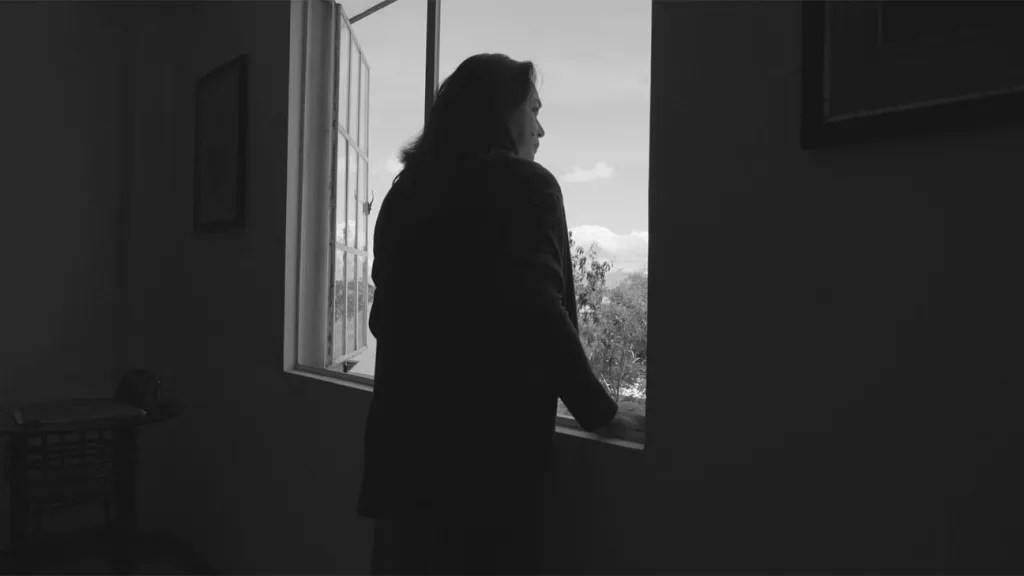
The Woman Who Left (2016)
What do you think of the idea that directors are seen as intellectuals, perhaps even as people who guide society? In your view, who truly is a director? Do you feel pressured to be an “important person” for both society and yourself?
Yes, there is a responsibility, and I think of Socrates. Socrates went to the streets and created the idea of a constant dialogue. I think the Socratic way is always the best approach for artists. It is a responsibility to society. The idea of doing art only for art’s sake can work in manicured societies. It may work in Vienna, but how about in Bangladesh, Sri Lanka, or Ukraine? In places where people are truly oppressed, we need a Socratic process. We need to go to the streets, educate people, talk to them, and explain what is happening and why. We need to tell them why they are suffering and that there are ways to solve it.
You are saying that cinema should open up a dialogue.
Harvard must go to Sri Lanka. Harvard must go to Bangladesh. That’s why Trump is so strong in America—because Harvard and Stanford are so close to their bubbles. They’re not going to the poor neighbourhoods. Why do we need these great institutions if we don’t use them for dialogue and real education?
They are elitist institutions.
Very much, yes.
What are the influences on your cinema in film history?
There are a lot, even Spaghetti Westerns and B-movies.
Some people consider your films “slow cinema”.
Just because they are long. That’s just a label. For people who are used to two-hour films with profit motives, it may seem slow. But my cinema is not slow. I hate classification. You could even call them B-movies or horror films, and I’m okay with that, but not “slow cinema.”
It is critics or historians who have this urge to classify.
When I was teaching in Cuba, there was a conflict between the documentary and fiction film departments. They were fighting, each claiming that only documentary or only fiction was real cinema. Classification creates these divides and ambiguous perspectives. It’s very fascistic when you label things.
What advice do you have for young filmmakers?
Just make cinema. Understand life more. Go to the streets and live in the streets. Don’t stay in your air-conditioned room, because the world is going to be fucked.
Thank you so much for all your answers
Interview: Matthias Kyska, Enes Serenli, Mert Mustafa Babacan