Interview with Tsai Ming-liang
During the 83rd Venice International Film Festival, we sat down with Tsai Ming-liang, who presented his latest film, Dust, Out of Competition. We met at the legendary Hotel Excelsior on Venice’s Lido, where the first Venice Film Festival was held in 1932. We spoke about his understanding of the cinematic image, different ways of thinking about time, the evolution of his own cinema, and the current landscape of film art and film exhibition.
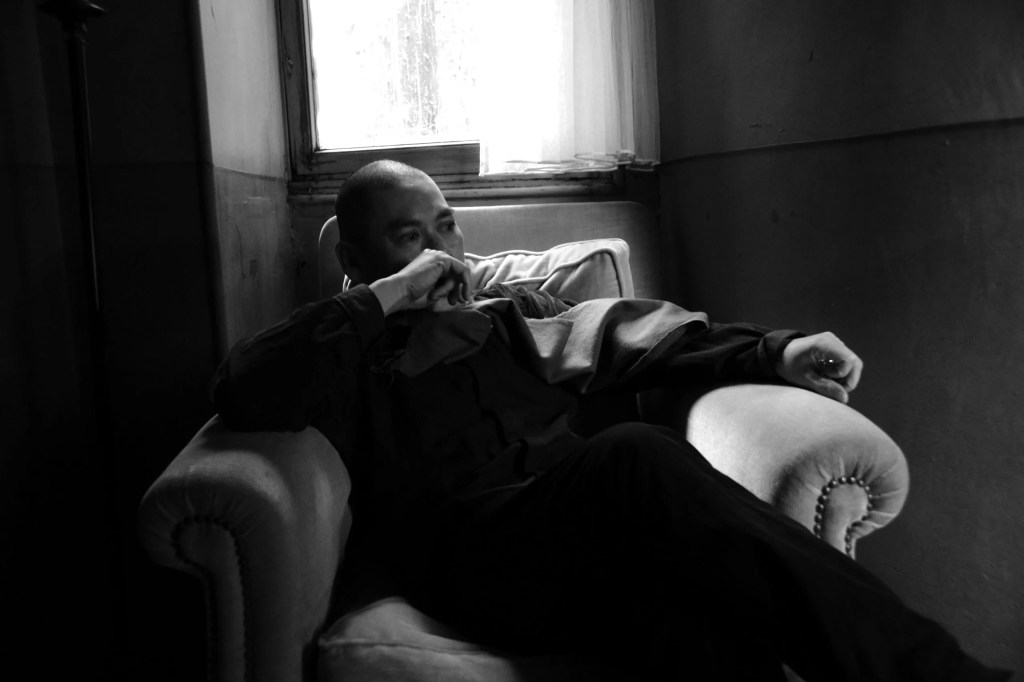
Photograph by William Laxton
What makes an image cinema for you? Some of your works are exhibited in museums and galleries, while others are shown in cinemas. What is it that makes a shot, or an image, “cinema” for you?
I don’t make films specifically for galleries or for cinemas. It just happens that my work can be presented in both places. I still want my films to be seen in cinemas, but I also think about the best way to present each work, whether that happens to be in a gallery or in a cinema. I simply keep making the images I want to make. It doesn’t really matter what kind of venue they are made for.
For me, the crucial point is that cinema has changed. Today, cinemas tend to show more commercial work because they need to make money. But I think cinema should be much freer and should be able to present different forms of art. In that sense, cinemas could think of themselves more like art galleries: as spaces where artists are free to create the kind of cinema they want to make.
Something else that has become important over the years is that many museums now have their own cinemas. There are also film institutions supported by governments. That is very important to me because these spaces are not limited to commercial films, and they give me greater freedom to present my work.
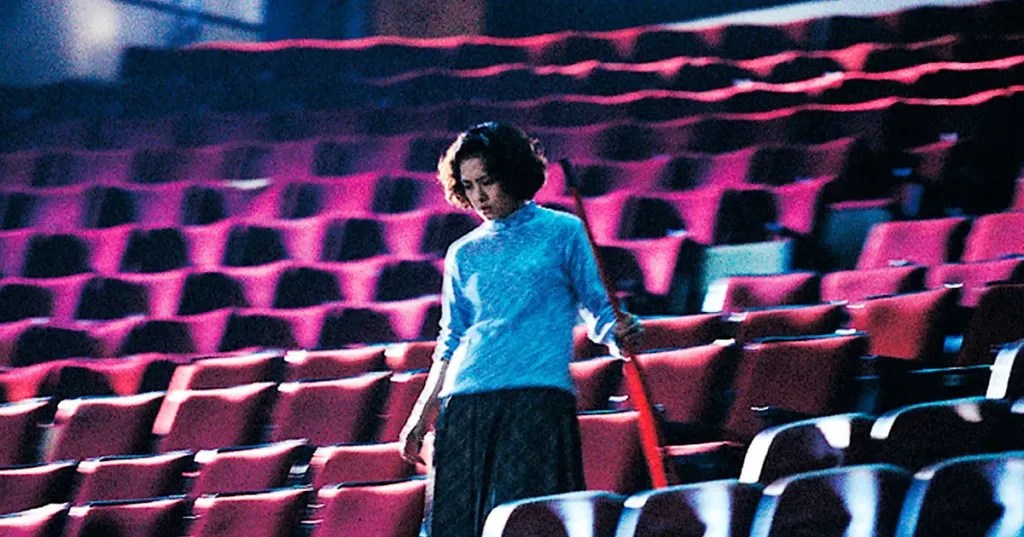
Goodbye, Dragon Inn (2003)
My second question is about your shooting and editing. Your cinema is famous for its long, slow shots. When you are shooting a take, what are you waiting for? How do you conceptualize the moment of filming, and how do you know when to stop? How long do you usually shoot a single take?
And, related to that, once you have the takes you want, how do you decide on their duration in the editing? When do you feel that a shot is long enough?
I can use the Walker series as an example. When we shoot Mr. Lee walking, a single take might last around twenty minutes. He might walk from one side of the frame to the other, or from the distance toward the camera. Because the walking itself takes so much effort, I normally shoot only one take of each scene.
And because the takes are so long, unexpected things inevitably happen, things that arise naturally and that I have no control over. I keep whatever happens during the take.
Later, during the editing, I watch the material again and again and decide which part of the shot works best.
It is difficult for me to explain a precise rule or strategy for deciding how long a sequence should be. In the end, it is something I have to feel.
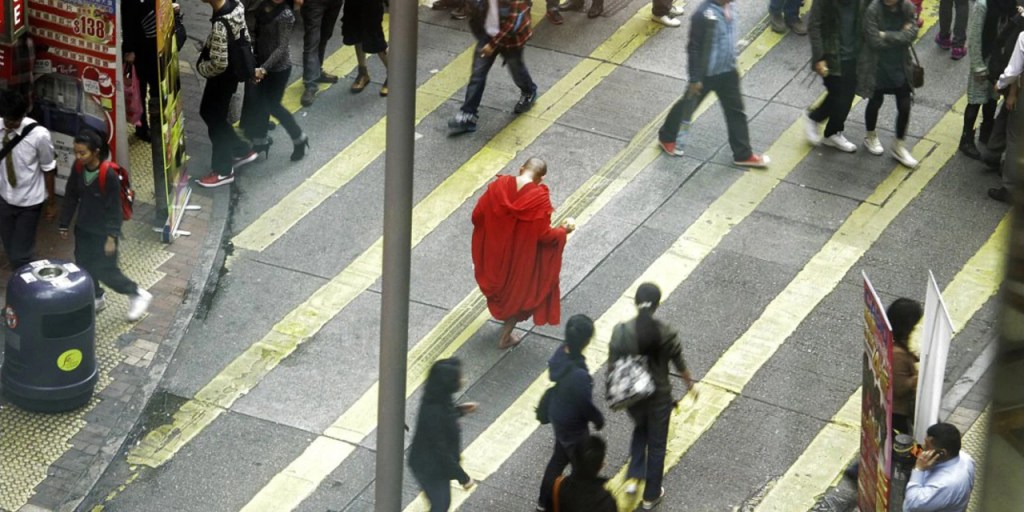
Walker (2012)
But if we look at your other films, apart from the Walker series, I’m thinking of Days, there are, I think, eight or ten shots that are extremely long. In that case, it sometimes seems as if every long take has a particular duration. How does that work in Days, both in the shooting and the editing?
Days is closer to a documentary in that respect. I really like watching the way Lee Kang-sheng cooks, so I asked him to go through the whole process again, beginning with buying groceries and then preparing the food. He does everything very naturally. My only instruction is that he should not look at the camera. He has to behave as though I am not there.
Then, in the editing, I watch the material over and over again and decide what to keep.
You also see Mr. Lee visiting doctors in Days. We filmed those situations with the consent of both Mr. Lee and the doctors, and there were no rehearsals. So again, the process is quite close to documentary filmmaking.
The duration of the shot is something I decide in the editing, not while I am shooting.
If you think about images in our world, in our daily lives, on the internet, they are almost always designed to keep our attention, to stimulate us, to give us information, to prevent us from looking away. But your cinema is almost the opposite. Is this a conscious position against the images of the contemporary world, or is this simply, intuitively, how you want images to be in your cinema?
The reels or clips you watch on the internet are all fake, because the audiences for those clips are normal people. They are not really watching images; they are just consuming them. My films are made for people who really want to look, who want to watch cinema. I need the audience to believe that what I am filming is real, or at least close to reality. Then they are willing to keep looking.
You imagine a particular kind of spectator. When we watch a film in the cinema, especially one of your films, there is sometimes the idea that you need a great deal of discipline in order to remain focused. But at the same time, there is also a great deal of freedom, because you are free to look and observe. Do you have an idea of your spectator as being somewhere between freedom and the discipline required to pay attention?
Yes, exactly. That is very close to how I think about it. My audience can be disciplined and completely free at the same time. I don’t try to stimulate them or guide them through a particular story or narrative. I want them to feel the reality of the film, its atmosphere, and to discover the beauty in the images for themselves. I believe my audience has a very strong sense of taste and perception.
I actually think of myself more as a painter. My tools are light and images, and I use them to create paintings. Every composition, every image you see, is a painting. My audience is very sensitive and intelligent. If they weren’t, they probably wouldn’t understand what I am doing. So I don’t worry very much about what an audience expects or wants from me.
You trust your audience.
I am also my own audience. I am a spectator of my own cinema, and I have a very clear idea of whether I am doing a good job or not. (Laughs.)
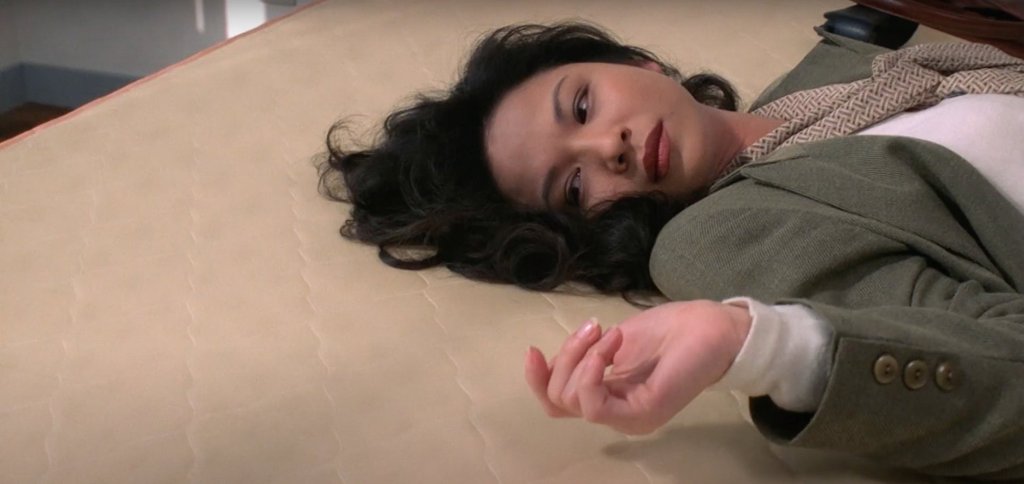
Vive L’Amour (1994)
If we look at your earlier films, there were more conventional elements, such as dialogue and narrative, in films like Vive L’Amour and What Time Is It There? But in recent years, your films seem to have become even more minimalist, and many of those conventional elements have disappeared. Is that a correct observation? And why did this happen? Looking back, how do you see your earlier films?
Yes, your observation about the changes in my cinema is correct. There was a turning point in my work, and I have been very conscious of the changes I was making.
In the past, I was more involved in the industrial world of cinema. But eventually I began to see that world as a kind of trap. There are many restrictions. You have less freedom, and you are expected to follow certain rules in order to make the kind of cinema the industry wants. Even something as basic as the length of a film, or the way a film is presented, is subject to certain rules.
I have been directing films for more than thirty years, and eventually I became tired of those rules. I wanted to work more directly with pure images. And I think audiences can become tired of this cinema-industry content as well. So I want to give them different kinds of images, different kinds of content, something that might inspire them.
Would making a more conventional narrative film require too much compromise for the kind of artistic freedom you are looking for?
Personally, I have actually been very fortunate. I have partners who give me a great deal of freedom, so in that sense I am not forced to compromise very much.
But I have chosen to make the work itself freer, to move toward something more purely visual, rather than making films that are commercial or primarily concerned with telling a story.
In recent years, I have felt that cinema has become too conventional, and audiences have also developed very conventional expectations about what cinema should be. That is one reason I feel closer now to galleries and museums. Artists working in those spaces often have more freedom than film directors do. That is the direction I have wanted to move in.
It sounds as though your recent work is in some ways closer to your own artistic instincts.
Every period is different. At the moment, I am very satisfied with what I am doing. But I still want to work with my actors, not only Mr. Lee, but also the other actors and actresses I have worked with. And even if I make another fiction film, I would want to approach it through different methods and different forms.
I already have some ideas and plans in mind. But I don’t want to repeat myself. I always want to find a new way of doing things.
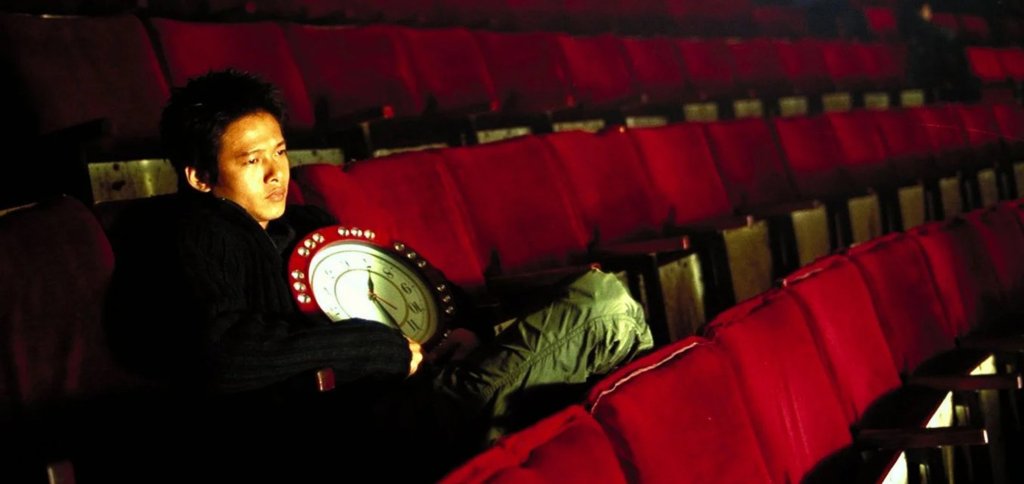
What Time is it There? (2001)
In your films, time seems to pass more slowly than it does in most cinema. How do you understand the relationship between real time and cinematic time?
Cinema and reality are never exactly the same. Even though my films are quite close to reality, there is still an act of creation. You still need an artistic approach. What I want to preserve is the authenticity of a particular stretch of time. That feeling of authenticity I present in my films is very important to me.
To me, there are two ways of thinking about time: meaningful time and meaningless time. If you can combine those two kinds of time, then it becomes real. Most audiences expect time in a film to be meaningful. They expect every scene to advance the story or communicate some particular meaning.
My films work differently. I allow meaningful and meaningless time to exist together. For me, that is part of observing the world authentically.
You can see the same idea in the Walker series. Mr. Lee might be walking very slowly from the distance toward the camera, and a pedestrian happens to pass him and light a cigarette. You could say that this event is meaningless. But suddenly something meaningful appears in the simple act of lighting that cigarette. So the meaningful and the meaningless coexist. I might preserve the entire duration of the shot because of something as small as that cigarette.
In the 2022 Sight and Sound directors’ poll, you included your own Goodbye, Dragon Inn among your ten greatest films of all time. Was that, in some sense, a way of positioning your own work within the history of cinema?
Goodbye, Dragon Inn is actually a very special film for me because, in a way, it contains two films: one directed by King Hu and one directed by me.
The King Hu film you see inside Goodbye, Dragon Inn was my favorite film when I was a child. Of course, as I grew older I watched many, many other films. But when Sight and Sound asked me to choose ten films, King Hu had to be there. So by choosing Goodbye, Dragon Inn, I could include both King Hu, who is my favorite director, and myself.
Goodbye, Dragon Inn is also very important to me personally because it marks a turning point in my career. It brought the idea of the gaze to me: gazing at an object, at a building, at a person, or at a face. That is why I chose my own film.
Sometimes sound makes us aware of a space beyond the frame. How important is it for you to create a sense of what remains unseen through sound?
All the sound you hear in my films is recorded on location. That includes not only the sounds coming from within the frame, but also sounds coming from outside it.
I don’t like using background music or artificial sound effects. Again, I am interested in authenticity, including the uncertainty that comes with it.
During post-production, I listen to the location recordings again and again. Then I decide whether there are certain sounds or moments that I want to emphasize more strongly.
What advice would you give to a young filmmaker?
First of all, my advice to a young filmmaker is to make the cinema they really want to make. To me, there are two kinds of cinema right now. One is commercial cinema, which repeats the same content over and over again in order to make more money. The other is auteur cinema, which has its own forms of expression, its own cinematic language, and more creative content.
They also have different groups of audiences. The audience for auteur cinema might be more difficult to deal with because they are smarter, so you have to bring new ideas to those audiences. If you want to attract attention, you need to have your own work and your own expression. There is nothing in between. It is impossible for a director to please a mass audience and at the same time be a great artist.
Do you still watch newly made films?
Rarely. I don’t watch many new films anymore and I am often disappointed by them.
I think there is a problem today with the way we think about creativity. For example, I don’t believe film school is necessarily a good place to cultivate great artists or great filmmakers. Film school can actually become a limitation on creativity. Many film schools feel more like professional training centers to me.
And filmmakers today are too young. They may not yet have had enough experience of life. Modern media also fills young filmmakers with many chaotic ideas.
So you think a filmmaker needs life experience?
Yes. In the past, perhaps you had to be forty years old or older before you could really become a filmmaker. Now someone can be eighteen or twenty and already call themselves a director. (Laughs.)
Everyone is being taught to tell a story. It may not even be a personal story, but there has to be a story. That is what film schools often teach their students: you need a script, you need a story, and then you have to present that story to the world.
Interview: Matthias Kyska